

Hey there! As a supplier of PET honeycomb panels, I often get asked about all sorts of technical details. One question that pops up quite a bit is, "What is the thermal expansion coefficient of a PET honeycomb panel?" Well, let's dive right into it and break it down in a way that's easy to understand.
First off, let's talk a bit about what thermal expansion coefficient actually means. In simple terms, it's a measure of how much a material expands or contracts when its temperature changes. Every material out there has its own unique thermal expansion coefficient, and it's a pretty important property to know, especially when you're using the material in different environments with varying temperatures.
Now, let's focus on PET honeycomb panels. PET, or polyethylene terephthalate, is a type of thermoplastic polymer that's commonly used in a whole bunch of applications, from beverage bottles to clothing fibers. When it comes to honeycomb panels, PET is a popular choice because it's lightweight, strong, and has good chemical resistance.
The thermal expansion coefficient of a PET honeycomb panel can vary depending on a few factors. One of the main factors is the specific formulation of the PET material. Different manufacturers might use slightly different additives or processing techniques, which can affect the thermal expansion characteristics of the panel.
On average, the linear thermal expansion coefficient of PET is around 70 - 100 x 10^-6 /°C. This means that for every degree Celsius increase in temperature, a PET honeycomb panel will expand by about 70 - 100 millionths of its original length. It might not sound like much, but over a large panel or in an environment with significant temperature changes, these small expansions can add up.
Why does this matter? Well, if you're using PET honeycomb panels in a construction project, for example, you need to take into account how the panels will expand and contract with temperature fluctuations. If you don't allow for enough space for expansion, the panels could warp, crack, or cause other structural issues over time.
Let's say you're using PET honeycomb panels for Honeycomb-building-panels in a building. During the hot summer months, the panels will expand. If they're installed too tightly together without any room for expansion, they could push against each other and cause the walls or floors to buckle. On the other hand, in the cold winter months, the panels will contract, and if there's too much extra space, it could lead to gaps and poor insulation.
Another important aspect is the relationship between the thermal expansion of the PET honeycomb panel and the other materials it's being used with. For instance, if you're attaching the PET honeycomb panel to a metal frame, the metal and the PET will have different thermal expansion coefficients. This difference can create stress at the interface between the two materials, which might lead to premature failure or reduced performance.
So, how do you deal with these thermal expansion issues? Well, one common approach is to use expansion joints. These are gaps or flexible connections that allow the panels to expand and contract without causing damage. By carefully designing and installing expansion joints, you can ensure that the PET honeycomb panels perform well in different temperature conditions.
Now, let's talk a bit about the benefits of using PET honeycomb panels despite these thermal expansion considerations. One of the biggest advantages is their lightweight nature. Compared to traditional building materials like wood or concrete, PET honeycomb panels are much lighter, which makes them easier to transport and install. This can save you a lot of time and money on your project.
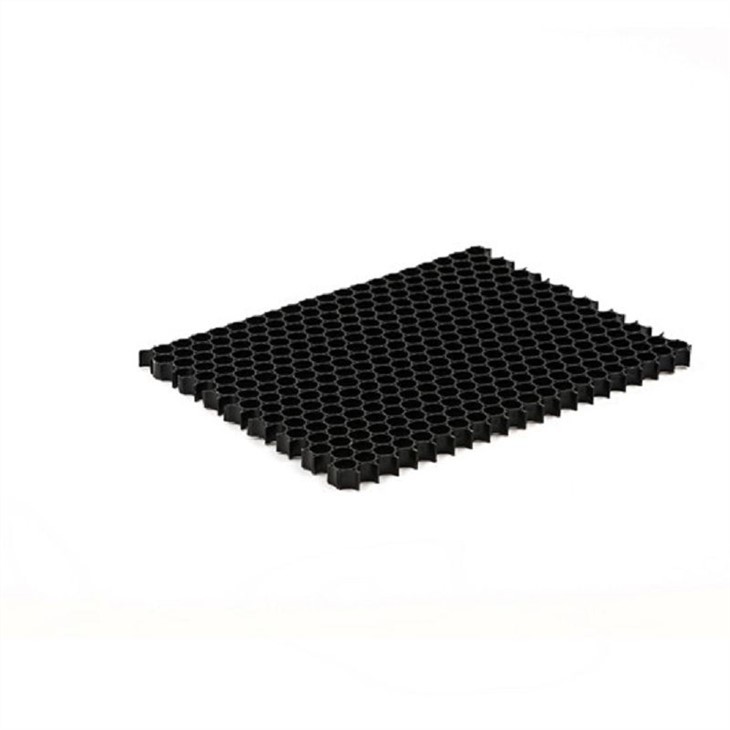
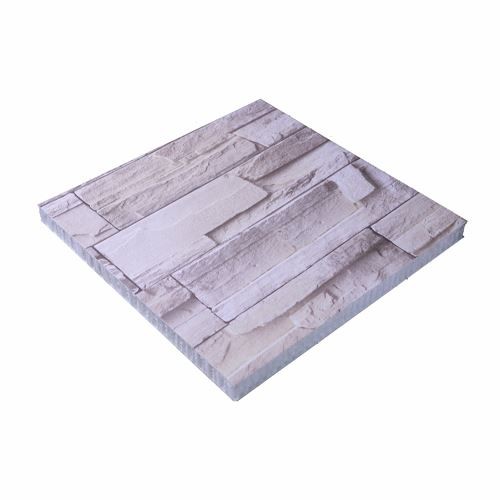
They also have excellent strength-to-weight ratios. The honeycomb structure provides a high level of stiffness and strength while keeping the weight down. This makes them suitable for a wide range of applications, from interior partitions to exterior cladding.
In addition, PET honeycomb panels are environmentally friendly. PET is a recyclable material, and using honeycomb panels can help reduce the amount of waste generated in the construction industry.
If you're in the market for Thermoplastic Honeycomb Core or PET honeycomb panels in general, I'd love to have a chat with you. As a supplier, I can offer you high-quality products that are designed to meet your specific needs. Whether you're working on a small DIY project or a large commercial construction job, I've got the expertise and the products to help you succeed.
So, if you have any questions or if you're ready to start discussing your project, don't hesitate to reach out. I'm here to help you make the right choices and ensure that your project goes smoothly. Let's work together to create something amazing with PET honeycomb panels!
References
- General knowledge of materials science and properties of PET polymers from industry - recognized textbooks and research papers.
- In - house testing and research on PET honeycomb panels conducted by our team over the years.