

Hey there! As a supplier of PP Honeycomb Core, I've seen firsthand how the manufacturing process can have a huge impact on the properties of these nifty materials. So, let's dive right in and explore this topic.
The Basics of PP Honeycomb Core
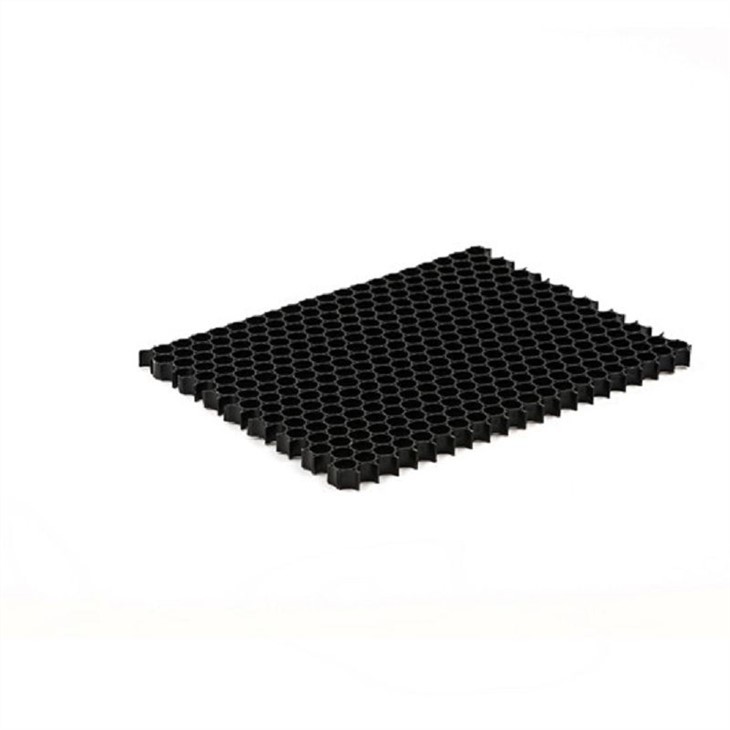
PP, or polypropylene, is a thermoplastic polymer that's widely used in various industries because of its great properties like good chemical resistance, flexibility, and relatively low cost. A honeycomb core is a lightweight, strong structure with a hexagonal cell pattern, similar to what you'd find in a beehive. When you combine the two, you get PP Honeycomb Core, which is used in a ton of applications, from Honeycomb-building-panels to aerospace components.
Manufacturing Process Steps and Their Impact
Extrusion
The first step in making PP Honeycomb Core is extrusion. In this process, the polypropylene resin is heated until it becomes molten. Then, it's forced through a die that gives the material its honeycomb shape. The temperature and pressure during extrusion are super important. If the temperature is too high, the PP can degrade, which means it loses some of its strength and chemical resistance. On the other hand, if the temperature is too low, the resin might not flow properly through the die, resulting in an uneven honeycomb structure.
The pressure also affects the cell size and wall thickness of the honeycomb. Higher pressure can lead to smaller cell sizes and thinner walls, which can make the core lighter but potentially less strong. Lower pressure might result in larger cells and thicker walls, giving the core more strength but also increasing its weight.
Cooling
Once the honeycomb structure is formed through extrusion, it needs to be cooled down. The cooling rate plays a big role in the final properties of the PP Honeycomb Core. A fast cooling rate can cause internal stresses in the material. These stresses can make the core more brittle and prone to cracking. On the flip side, a slow cooling rate allows the molecules in the PP to arrange themselves more orderly, which can improve the material's toughness and dimensional stability.
Cutting and Finishing
After cooling, the PP Honeycomb Core is cut into the desired sizes and shapes. The cutting process can introduce some surface damage, like rough edges or microcracks. These surface defects can affect the core's performance, especially in applications where it needs to be bonded to other materials. For example, if the edges are too rough, the bonding strength between the core and the facing material might be reduced.
Finishing processes, such as sanding or coating, can also change the properties of the core. Sanding can smooth the surface, which can improve the bonding performance. Coating can add additional properties, like fire resistance or water repellency.
Impact on Physical Properties
Density
The manufacturing process can have a significant impact on the density of the PP Honeycomb Core. As mentioned earlier, the cell size and wall thickness, which are influenced by the extrusion pressure, directly affect the density. A core with smaller cells and thinner walls will have a lower density, making it lighter. This is great for applications where weight is a concern, like in the aerospace industry. However, a lower density core might not be as strong as a higher density one.
Strength and Stiffness
The strength and stiffness of the PP Honeycomb Core are closely related to its cell structure and the quality of the PP material. A well - formed honeycomb structure with uniform cell sizes and thick enough walls will generally have better strength and stiffness. The manufacturing process, especially extrusion and cooling, can affect the uniformity of the cell structure. If the extrusion is not done properly, there might be areas with weaker cell walls, which can reduce the overall strength of the core.
Chemical Resistance
The chemical resistance of PP is one of its key properties. However, the manufacturing process can influence this as well. If the PP degrades during extrusion due to high temperatures, its chemical resistance can be compromised. Also, any surface defects introduced during cutting or finishing can provide pathways for chemicals to penetrate the core, reducing its chemical resistance.
Impact on Mechanical Properties
Compression Strength
Compression strength is an important property for PP Honeycomb Core, especially in applications where it will be subjected to compressive forces. The cell structure and wall thickness play a major role in determining the compression strength. A core with thicker walls and a more uniform cell structure will generally have higher compression strength. The manufacturing process, including extrusion and cooling, can affect these factors. For example, if the cooling rate is too fast and internal stresses are introduced, the compression strength can be reduced.
Flexural Strength
Flexural strength is another crucial mechanical property. It refers to the ability of the core to resist bending. The way the honeycomb structure is formed during extrusion and how it is cooled can affect the flexural strength. A well - formed honeycomb with good bonding between the cells will have better flexural strength. Any surface defects or internal stresses can reduce the flexural strength.
Applications and the Role of Manufacturing
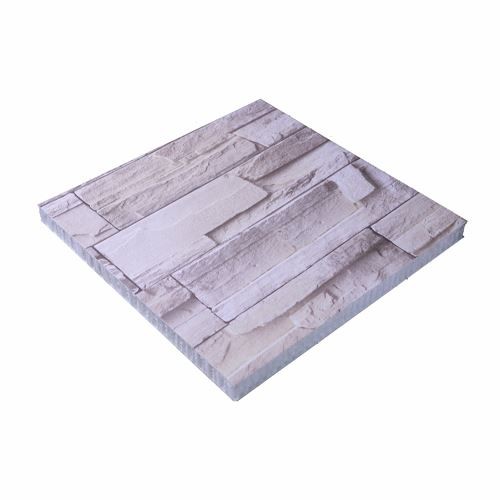
Different applications require different properties from the PP Honeycomb Core. In the construction industry, Honeycomb-building-panels need to have good strength and dimensional stability. The manufacturing process needs to be carefully controlled to ensure these properties. For example, a slow cooling rate during production can improve the dimensional stability of the core, which is essential for building panels that need to fit together precisely.
In the automotive industry, weight reduction is a major goal. So, a manufacturing process that can produce a low - density PP Honeycomb Core without sacrificing too much strength is preferred. This might involve using higher extrusion pressures to create smaller cells and thinner walls.
Conclusion
As you can see, the manufacturing process of PP Honeycomb Core has a profound impact on its properties. From the initial extrusion to the final finishing, every step can either enhance or degrade the material's physical and mechanical properties. As a supplier, we understand the importance of controlling these processes to meet the specific requirements of our customers.
If you're in the market for high - quality Thermoplastic Honeycomb Core or have any questions about how our manufacturing process can be tailored to your needs, don't hesitate to reach out. We're here to help you find the perfect solution for your application.
References
- "Plastics Engineering Handbook of the Society of Plastics Engineers"
- "Polymer Processing: Principles and Design"
So, if you're interested in discussing your PP Honeycomb Core needs, just let us know. We're ready to have a chat and work together to get you the best product for your project.