

What is the shear strength of PP Honeycomb Core?
As a supplier of PP Honeycomb Core, I often encounter questions from clients regarding the various properties of our product, and one of the most frequently asked is about the shear strength of PP Honeycomb Core. In this blog, I'll delve into what shear strength means in the context of PP Honeycomb Core, its significance, and how it impacts different applications.
Understanding Shear Strength
Shear strength refers to the maximum amount of shear stress that a material can withstand before it fails. Shear stress occurs when two parts of a material are forced to slide past each other in opposite directions. In the case of PP Honeycomb Core, which is made of polypropylene and has a honeycomb - like structure, shear strength is crucial for its performance in many applications.
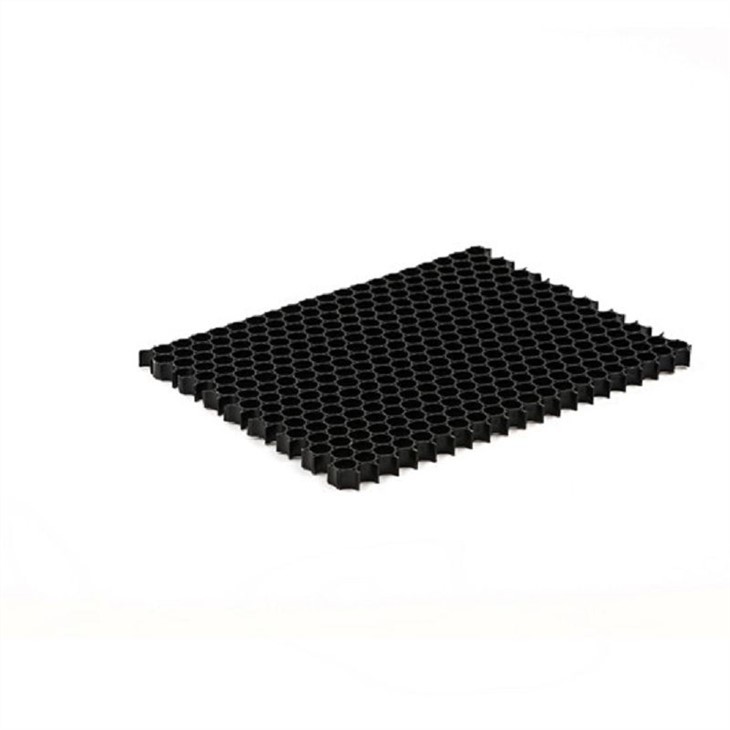
The honeycomb structure of PP Honeycomb Core provides it with unique mechanical properties. The hexagonal cells distribute stress evenly throughout the material. When shear forces are applied, the walls of the honeycomb cells resist the sliding motion. The shear strength of PP Honeycomb Core depends on several factors, including the thickness of the cell walls, the size of the honeycomb cells, and the quality of the polypropylene used.
Factors Affecting Shear Strength
- Cell Wall Thickness: A thicker cell wall generally results in higher shear strength. When the walls are thicker, they can better resist the forces trying to make the layers of the honeycomb slide past each other. Our manufacturing process allows us to control the cell wall thickness precisely, enabling us to produce PP Honeycomb Core with different shear strength ratings to meet the diverse needs of our customers.
- Cell Size: Smaller honeycomb cells can also contribute to increased shear strength. With smaller cells, there are more cell walls per unit area to resist shear forces. This is because the smaller cells provide more points of contact and support within the structure, making it more resistant to deformation under shear stress.
- Polypropylene Quality: The quality of the polypropylene resin used in the production of the honeycomb core is another critical factor. High - quality polypropylene has better mechanical properties, such as higher stiffness and toughness. These properties translate into better shear strength for the PP Honeycomb Core. We source the best polypropylene materials to ensure that our products have excellent shear strength and other mechanical characteristics.
Significance of Shear Strength in Applications
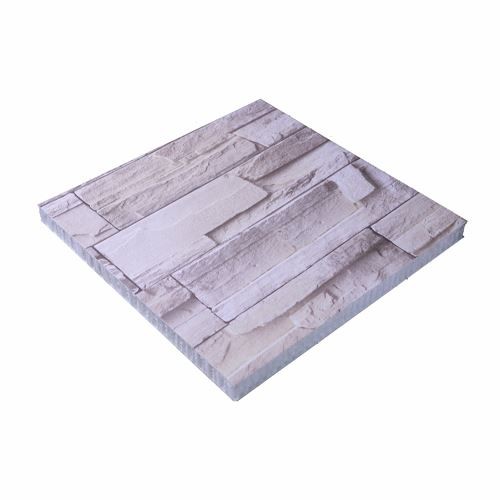
- Construction: In the construction industry, PP Honeycomb Core is used in Honeycomb - building - panels. These panels are often subjected to various forces, including shear forces. For example, when a building experiences wind loads or seismic activity, the panels need to be able to withstand the shear forces without failing. A high - shear - strength PP Honeycomb Core ensures the structural integrity of the building panels, making them a reliable choice for both interior and exterior applications.
- Automotive: In the automotive sector, PP Honeycomb Core is used in lightweight components. These components need to have sufficient shear strength to withstand the vibrations and forces encountered during vehicle operation. High - shear - strength honeycomb cores can be used in parts such as door panels, seat backs, and dashboard supports. By using PP Honeycomb Core with appropriate shear strength, automotive manufacturers can reduce the weight of the vehicle without sacrificing its structural performance.
- Aerospace: The aerospace industry also benefits from the high shear strength of PP Honeycomb Core. In aircraft interiors, honeycomb - based panels are used for partitions, ceilings, and floors. These panels must be able to withstand the shear forces generated during flight, including turbulence and maneuvering. Our Thermoplastic Honeycomb Core with excellent shear strength meets the strict requirements of the aerospace industry, providing a lightweight and strong solution for interior applications.
Measuring Shear Strength
There are several standard test methods to measure the shear strength of PP Honeycomb Core. One common method is the double - lap shear test. In this test, two specimens of the honeycomb core are bonded to a rigid substrate, and a shear force is applied parallel to the bonding surface until failure occurs. The maximum force at failure is then used to calculate the shear strength of the material.
Another method is the short - beam shear test, which is often used for composite materials. In this test, a short beam of the honeycomb core is supported at two points, and a load is applied at the center until shear failure occurs. These tests provide accurate data on the shear strength of our PP Honeycomb Core, allowing us to ensure that our products meet the specified requirements.
Improving Shear Strength
We are constantly researching and developing new ways to improve the shear strength of our PP Honeycomb Core. One approach is to modify the manufacturing process to optimize the cell structure. By adjusting the extrusion parameters, we can create honeycomb cores with more uniform cell sizes and thicker cell walls, which in turn increases the shear strength.
We also explore the use of additives in the polypropylene resin. Some additives can enhance the mechanical properties of the resin, including its shear strength. By carefully selecting and incorporating these additives, we can produce PP Honeycomb Core with even better performance.
Conclusion
The shear strength of PP Honeycomb Core is a crucial property that determines its suitability for a wide range of applications. As a supplier, we understand the importance of providing high - quality products with excellent shear strength. Our PP Honeycomb Core, with its unique honeycomb structure and carefully controlled manufacturing process, offers reliable shear strength for construction, automotive, aerospace, and many other industries.
If you are interested in our PP Honeycomb Core products and want to discuss your specific requirements regarding shear strength or other properties, please feel free to contact us. We are ready to provide you with detailed information and work with you to find the best solution for your project.
References
- ASTM D5379/D5379M - 19, Standard Test Method for Shear Properties of Composite Materials by the V - Notched Beam Method.
- ASTM D3846 - 14, Standard Test Method for Apparent Horizontal Shear Strength of Sandwich Cores by Short - Beam Method.