

What is the flexural strength of Non Woven Honeycomb Panel?
As a supplier of Non Woven Honeycomb Panels, I often get asked about the flexural strength of these innovative products. Flexural strength is a crucial property that determines how well a material can withstand bending forces without breaking or deforming. In this blog post, I'll delve into the concept of flexural strength in Non Woven Honeycomb Panels, exploring its significance, factors affecting it, and how it relates to the performance of these panels in various applications.
Understanding Flexural Strength
Flexural strength, also known as bending strength, is the maximum stress a material can withstand when subjected to a bending load before it fails. It is typically measured by applying a load to a specimen of the material at a specific rate until it breaks or reaches a predefined level of deformation. The flexural strength is then calculated based on the maximum load applied and the dimensions of the specimen.
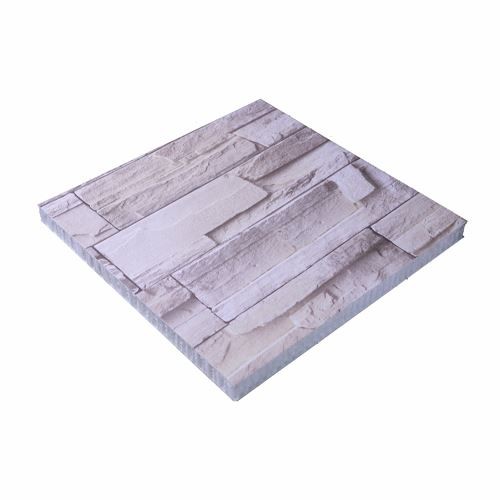
In the case of Non Woven Honeycomb Panels, flexural strength is an important consideration because these panels are often used in applications where they need to support loads or resist bending forces. For example, in the construction industry, Non Woven Honeycomb Panels can be used as wall panels, ceiling panels, or flooring substrates. In these applications, the panels need to be able to support the weight of people, furniture, and other objects without sagging or breaking.
Significance of Flexural Strength in Non Woven Honeycomb Panels
The flexural strength of Non Woven Honeycomb Panels is significant for several reasons. Firstly, it determines the load-bearing capacity of the panels. A panel with a higher flexural strength can support heavier loads without failing, making it suitable for applications where high strength is required. Secondly, flexural strength affects the durability and longevity of the panels. A panel that can withstand bending forces without deforming or breaking is less likely to develop cracks or other forms of damage over time, ensuring a longer service life.
In addition, the flexural strength of Non Woven Honeycomb Panels can also impact the overall performance of the structure or product in which they are used. For example, in the automotive industry, Non Woven Honeycomb Panels can be used as interior trim panels or structural components. A panel with a high flexural strength can help to improve the stiffness and rigidity of the vehicle, reducing noise and vibration and enhancing the overall driving experience.
Factors Affecting the Flexural Strength of Non Woven Honeycomb Panels
Several factors can affect the flexural strength of Non Woven Honeycomb Panels. These include the material composition of the panel, the thickness and density of the panel, the cell size and shape of the honeycomb structure, and the manufacturing process used to produce the panel.
- Material Composition: The material used to make the Non Woven Honeycomb Panel can have a significant impact on its flexural strength. Different materials have different mechanical properties, such as stiffness, strength, and ductility, which can affect how well the panel can withstand bending forces. For example, panels made from high-strength materials such as fiberglass or carbon fiber tend to have higher flexural strengths than panels made from lower-strength materials such as paper or plastic.
- Thickness and Density: The thickness and density of the Non Woven Honeycomb Panel also play a role in determining its flexural strength. Generally, thicker and denser panels tend to have higher flexural strengths than thinner and less dense panels. This is because a thicker panel has more material to resist the bending forces, while a denser panel has a higher concentration of fibers or particles, which can enhance its strength and stiffness.
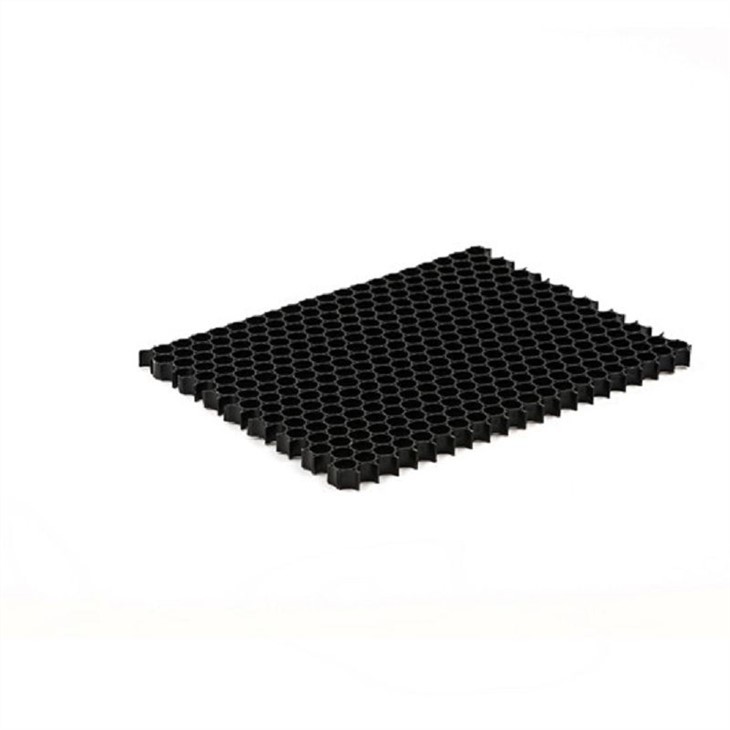
- Cell Size and Shape: The cell size and shape of the honeycomb structure can also affect the flexural strength of the Non Woven Honeycomb Panel. Smaller cell sizes and more regular cell shapes tend to result in higher flexural strengths because they provide more support and distribute the bending forces more evenly across the panel. In addition, the orientation of the honeycomb cells can also impact the flexural strength, with panels having cells oriented in the direction of the bending load typically exhibiting higher strengths.
- Manufacturing Process: The manufacturing process used to produce the Non Woven Honeycomb Panel can also influence its flexural strength. Different manufacturing processes can result in different levels of fiber alignment, bonding, and porosity, which can affect the mechanical properties of the panel. For example, panels produced using a compression molding process tend to have higher flexural strengths than panels produced using a vacuum bagging process because the compression molding process can ensure better fiber alignment and bonding.
Measuring the Flexural Strength of Non Woven Honeycomb Panels
To determine the flexural strength of Non Woven Honeycomb Panels, standardized testing methods are typically used. One commonly used method is the three-point bending test, in which a specimen of the panel is supported at two points and a load is applied at the center until the panel fails. The flexural strength is then calculated based on the maximum load applied and the dimensions of the specimen.
Another method that can be used to measure the flexural strength of Non Woven Honeycomb Panels is the four-point bending test. In this test, the specimen is supported at two points and a load is applied at two additional points, creating a more uniform bending moment across the panel. The flexural strength is calculated in a similar manner to the three-point bending test.
It's important to note that the flexural strength of Non Woven Honeycomb Panels can vary depending on the testing conditions, such as the loading rate, the span length, and the temperature and humidity of the environment. Therefore, it's essential to follow the appropriate testing standards and procedures to ensure accurate and reliable results.
Applications of Non Woven Honeycomb Panels with High Flexural Strength
Non Woven Honeycomb Panels with high flexural strength are used in a wide range of applications across various industries. Some of the common applications include:
- Construction: In the construction industry, Non Woven Honeycomb Panels with high flexural strength can be used as wall panels, ceiling panels, flooring substrates, and roofing materials. These panels offer excellent strength-to-weight ratios, making them ideal for applications where lightweight yet strong materials are required. For more information on honeycomb building panels, you can visit Honeycomb-building-panels.
- Automotive: In the automotive industry, Non Woven Honeycomb Panels can be used as interior trim panels, structural components, and sound insulation materials. Panels with high flexural strength can help to improve the stiffness and rigidity of the vehicle, reducing noise and vibration and enhancing the overall driving experience. Thermoplastic Honeycomb Core is an example of a product that can be used in automotive applications.
- Aerospace: In the aerospace industry, Non Woven Honeycomb Panels with high flexural strength are used in the construction of aircraft wings, fuselages, and other structural components. These panels offer excellent strength and stiffness at a low weight, making them essential for achieving fuel efficiency and performance in aircraft.
- Furniture: In the furniture industry, Non Woven Honeycomb Panels can be used as table tops, cabinet doors, and drawer fronts. Panels with high flexural strength can provide a stable and durable surface that can withstand the weight of objects and regular use.
Conclusion
In conclusion, the flexural strength of Non Woven Honeycomb Panels is a critical property that determines their load-bearing capacity, durability, and performance in various applications. By understanding the concept of flexural strength, the factors that affect it, and how it is measured, you can make informed decisions when selecting Non Woven Honeycomb Panels for your specific needs.
As a supplier of Non Woven Honeycomb Panels, we are committed to providing high-quality products with excellent flexural strength. Our panels are manufactured using advanced materials and processes to ensure optimal performance and reliability. If you are interested in learning more about our Non Woven Honeycomb Panels or have any questions about flexural strength, please feel free to contact us. We would be happy to discuss your requirements and provide you with the information and support you need.
References
- ASTM D790 - Standard Test Methods for Flexural Properties of Unreinforced and Reinforced Plastics and Electrical Insulating Materials
- ISO 178 - Plastics - Determination of flexural properties