

As a supplier of Honeycomb Building Panels, I've often been asked the question: "Are honeycomb building panels strong?" It's a valid inquiry, especially when considering the structural integrity and long - term performance of any building material. In this blog, I'll delve into the science behind honeycomb building panels and explain why they are indeed strong and reliable for various construction applications.
The Structure of Honeycomb Building Panels
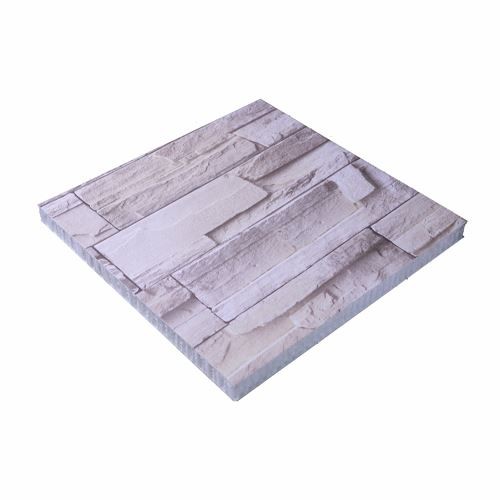
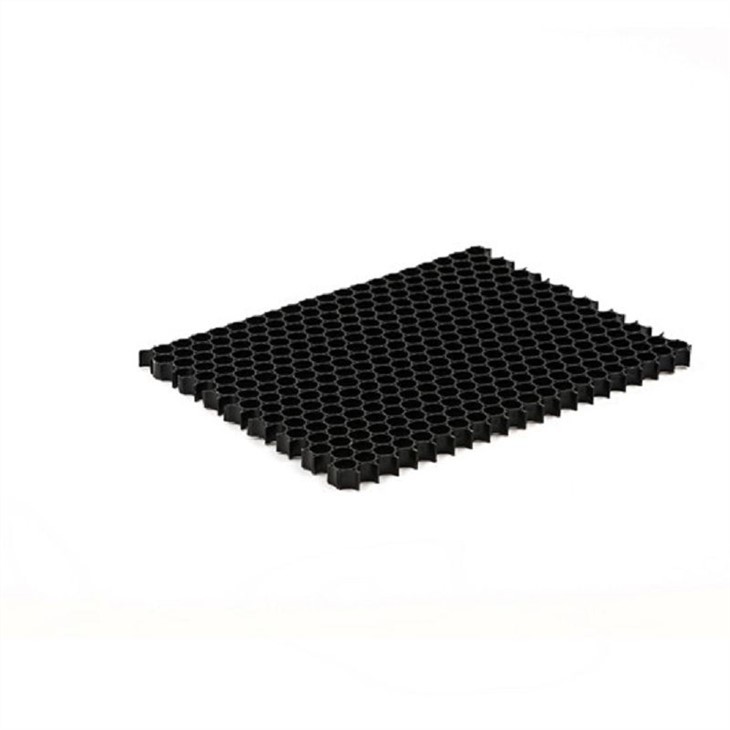
Honeycomb building panels are named for their unique internal structure, which mimics the hexagonal cells of a beehive. This structure is typically made from materials like paper, aluminum, or Thermoplastic Honeycomb Core. The honeycomb core is sandwiched between two outer layers, which can be made of different materials such as wood, metal, or composite materials.
The hexagonal shape of the honeycomb cells is not a random design. It is a highly efficient geometric form that has been optimized by nature over millions of years. Mathematically, the hexagon provides the maximum amount of enclosed space with the minimum amount of material. This means that honeycomb structures can use less material to achieve the same or even better strength compared to solid materials.
Strength - to - Weight Ratio
One of the key advantages of honeycomb building panels is their excellent strength - to - weight ratio. The honeycomb core distributes loads evenly across the panel, allowing it to support significant weight without being overly heavy. This is in contrast to solid panels, which may be much heavier for the same level of strength.
For example, in aerospace applications, where weight is a critical factor, honeycomb panels are widely used. An aircraft needs to be as light as possible to reduce fuel consumption, but it also requires strong and durable materials to withstand the stresses of flight. Honeycomb panels meet these requirements by providing high strength while keeping the overall weight down.
In the construction industry, this strength - to - weight ratio translates into easier handling and installation. Builders can transport and install honeycomb building panels more efficiently than traditional heavy - duty building materials. This not only saves time but also reduces labor costs.
Compressive Strength
Compressive strength is an important measure of a building material's ability to withstand forces that push or squeeze it. Honeycomb building panels have impressive compressive strength due to their unique structure.
The hexagonal cells of the honeycomb core act as individual columns that can resist compressive forces. When a load is applied to the panel, the cells distribute the force throughout the structure, preventing any single point from bearing too much stress. This allows the panel to support heavy loads without collapsing.
In real - world applications, honeycomb building panels are used in flooring systems. They can support the weight of furniture, equipment, and people without showing signs of significant deformation. For instance, in commercial buildings with high - traffic areas, honeycomb floor panels can maintain their structural integrity over long periods.
Flexural Strength
Flexural strength refers to a material's ability to resist bending. Honeycomb building panels also perform well in this regard. The combination of the honeycomb core and the outer layers creates a composite structure that can withstand bending forces.
The outer layers of the panel provide stiffness, while the honeycomb core helps to transfer the bending loads across the panel. This results in a panel that can span longer distances without sagging. In roofing applications, for example, honeycomb building panels can be used to create large - span roofs without the need for excessive support structures.
Impact Resistance
Another aspect of strength is impact resistance. Honeycomb building panels can absorb and dissipate the energy of impacts, making them suitable for applications where the panels may be subject to accidental collisions or other forms of impact.
The honeycomb structure acts as a shock absorber. When an impact occurs, the cells of the honeycomb deform and absorb the energy, reducing the likelihood of damage to the panel. This makes honeycomb building panels a good choice for exterior walls in areas prone to hail, or in industrial settings where there is a risk of equipment collisions.
Applications and Performance
Honeycomb building panels are used in a wide range of applications, from residential construction to commercial and industrial projects. In residential buildings, they can be used for interior walls, partitions, and even as a substitute for traditional plywood in some cases. The light weight and ease of installation make them an attractive option for DIY enthusiasts and professional builders alike.
In commercial construction, honeycomb building panels are used for office partitions, storefronts, and display units. Their strength and aesthetic appeal make them suitable for creating modern and functional spaces. In industrial settings, they are used for machinery enclosures, storage bins, and other structures that require strong and durable materials.
Quality Control and Testing
As a supplier of Honeycomb - building - panels, we take quality control very seriously. Our honeycomb building panels undergo rigorous testing to ensure they meet or exceed industry standards.
We test the panels for compressive strength, flexural strength, and impact resistance using state - of - the - art equipment. We also conduct environmental tests to ensure that the panels can withstand changes in temperature, humidity, and other environmental factors. By adhering to strict quality control measures, we can guarantee that our customers receive high - quality honeycomb building panels that will perform well in their intended applications.
Conclusion
In conclusion, honeycomb building panels are indeed strong. Their unique honeycomb structure, combined with the choice of appropriate outer layers, gives them excellent strength - to - weight ratio, compressive strength, flexural strength, and impact resistance. These properties make them suitable for a wide range of construction applications, from residential to commercial and industrial projects.
If you're considering using honeycomb building panels for your next project, I encourage you to reach out to us. We can provide you with detailed information about our products, including specifications, performance data, and pricing. Our team of experts is also available to answer any questions you may have and to assist you in choosing the right honeycomb building panels for your specific needs. Contact us today to start a conversation about your procurement requirements.
References
- Gibson, L. J., & Ashby, M. F. (1997). Cellular Solids: Structure and Properties. Cambridge University Press.
- Allen, H. G. (2013). Composite Materials Mechanics. CRC Press.
- ASTM International. (2020). Standard Test Methods for Compressive Properties of Rigid Cellular Plastics. ASTM D1621 - 16.