

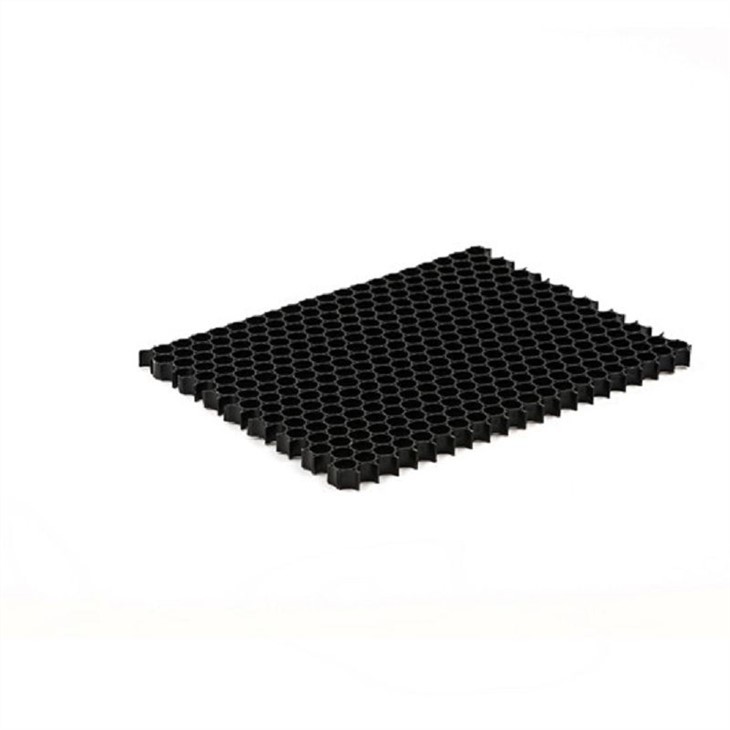
Hey there! I'm a supplier of PP Honeycomb Core, and today I wanna dive into how the addition of additives affects the properties of this awesome material. PP Honeycomb Core is super versatile, used in all sorts of industries like construction, automotive, and packaging. And the use of additives can really take its performance to the next level.
First off, let's talk about what additives are. Additives are substances that we mix into the PP (polypropylene) resin when making the honeycomb core. They can be things like antioxidants, UV stabilizers, flame retardants, and fillers. Each type of additive has its own unique function and can change the properties of the PP Honeycomb Core in different ways.
Antioxidants
Antioxidants are a big deal when it comes to the long - term stability of PP Honeycomb Core. Polypropylene is prone to oxidation, especially when it's exposed to heat and oxygen over time. Oxidation can make the material brittle, reduce its strength, and cause discoloration. By adding antioxidants, we can slow down this oxidation process.
For example, a phenolic antioxidant can react with the free radicals that are produced during oxidation. These free radicals are like little troublemakers that break down the polymer chains in the PP. The antioxidant neutralizes them, protecting the integrity of the honeycomb core. As a result, the core can maintain its mechanical properties, such as its tensile strength and impact resistance, for a much longer time. This is crucial for applications where the honeycomb core will be used outdoors or in high - temperature environments.
UV Stabilizers
If you're using PP Honeycomb Core outdoors, you've got to worry about UV radiation from the sun. UV rays can cause photodegradation of the polypropylene. This means that the UV energy breaks the chemical bonds in the polymer, leading to a loss of strength, color fading, and surface cracking.
UV stabilizers come to the rescue here. There are two main types: UV absorbers and hindered amine light stabilizers (HALS). UV absorbers work by absorbing the UV radiation and converting it into heat, which is then dissipated. HALS, on the other hand, react with the radicals formed during photodegradation and regenerate themselves, providing long - term protection.
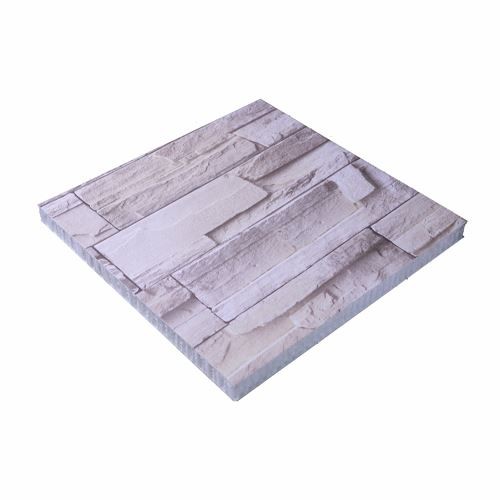
With the addition of UV stabilizers, our Honeycomb - building - panels can withstand years of sunlight exposure without significant degradation. This makes them a great choice for building facades, outdoor furniture, and even marine applications.
Flame Retardants
In many industries, fire safety is a top concern. PP Honeycomb Core is flammable by nature, but we can change that by adding flame retardants. Flame retardants work in different ways. Some release gases that dilute the oxygen around the burning material, while others form a char layer on the surface of the core, which acts as a barrier to heat and oxygen.
For example, halogen - based flame retardants are effective in suppressing flames. However, due to environmental concerns, more and more people are turning to halogen - free alternatives like phosphorus - based or nitrogen - based flame retardants. These alternatives are not only more environmentally friendly but also provide good flame - retardant performance.
When we add flame retardants to our Thermoplastic Honeycomb Core, it can meet strict fire safety standards. This is essential for applications in the aerospace, railway, and building industries, where fire prevention is of utmost importance.
Fillers
Fillers are another type of additive that can significantly affect the properties of PP Honeycomb Core. Common fillers include calcium carbonate, talc, and glass fibers.
Calcium carbonate is a cheap and widely available filler. When added to the PP resin, it can increase the stiffness of the honeycomb core. It also improves the dimensional stability, reducing the shrinkage that occurs during the cooling process after molding. This makes the core more precise in terms of its size and shape, which is important for applications where tight tolerances are required.
Talc is another filler that can enhance the mechanical properties of the core. It has a platelet - like structure, which can reinforce the polymer matrix. This leads to an increase in the flexural strength and modulus of the honeycomb core.
Glass fibers are the heavyweights when it comes to fillers. They can provide a huge boost in strength and stiffness. The high aspect ratio of glass fibers allows them to transfer stress effectively within the polymer matrix. However, using glass fibers also has some challenges. They can be abrasive to the processing equipment, and proper dispersion is crucial to achieve the desired properties.
Impact on Processing
The addition of additives doesn't just affect the final properties of the PP Honeycomb Core; it also impacts the processing. For example, some additives can increase the melt viscosity of the PP resin. This means that more energy is required to process the material during extrusion or injection molding. On the other hand, certain additives can act as lubricants, reducing the friction between the polymer and the processing equipment, which can make the processing smoother.
We need to carefully balance the amount of additives to ensure that the processing is efficient and that the final product meets the quality standards. Sometimes, we may need to adjust the processing parameters, such as the temperature and pressure, when using different additives.
Cost - Benefit Analysis
Of course, adding additives comes at a cost. Antioxidants, UV stabilizers, and flame retardants can be relatively expensive. However, the benefits they provide often outweigh the costs. For example, using UV stabilizers can extend the lifespan of the honeycomb core, reducing the need for frequent replacements. This can save money in the long run, especially for large - scale projects.
When it comes to fillers, they can actually reduce the cost of the material. Since fillers are usually cheaper than the base PP resin, adding them can lower the overall material cost while still improving certain properties.
Conclusion
In conclusion, the addition of additives can have a profound impact on the properties of PP Honeycomb Core. Whether it's improving the long - term stability with antioxidants, protecting against UV radiation, enhancing fire safety, or increasing the mechanical properties with fillers, additives play a crucial role in making the honeycomb core suitable for a wide range of applications.
As a supplier, we're constantly experimenting with different additive combinations to offer the best - performing PP Honeycomb Core to our customers. If you're in the market for high - quality PP Honeycomb Core and want to discuss how additives can meet your specific requirements, don't hesitate to reach out. We're here to help you find the perfect solution for your project.
References
- Polymer Additives: Principles and Applications, by George Wypych
- Plastics Additives Handbook, by Hans Zweifel