

As a supplier of PP honeycomb core, I am often asked about its composition. PP honeycomb core, also known as polypropylene honeycomb core, is a lightweight and high - strength material that has found wide applications in various industries. In this blog, I will delve into the composition of PP honeycomb core and explain how its components contribute to its unique properties.
The Base Material: Polypropylene
The primary component of PP honeycomb core is polypropylene. Polypropylene is a thermoplastic polymer that is widely used in the plastics industry due to its excellent combination of properties. It is derived from propylene monomers through a polymerization process.
One of the key advantages of polypropylene is its high chemical resistance. It can withstand exposure to a wide range of chemicals, including acids, alkalis, and solvents. This makes PP honeycomb core suitable for use in environments where chemical corrosion is a concern, such as in the chemical processing industry or in outdoor applications where it may be exposed to rain and other environmental pollutants.
Polypropylene also has a relatively low density, which is a major factor in the lightweight nature of PP honeycomb core. Compared to many other materials, such as metals or wood, polypropylene offers a high strength - to - weight ratio. This means that PP honeycomb core can provide significant structural support while adding minimal weight to the overall structure.
In addition, polypropylene has good thermal properties. It has a relatively high melting point, typically around 160 - 170°C, which allows PP honeycomb core to maintain its shape and properties under normal operating temperatures. It also has low thermal conductivity, which can contribute to energy - efficiency in applications where insulation is required, such as in building panels.
Additives in PP Honeycomb Core
While polypropylene forms the base of the PP honeycomb core, various additives are often incorporated to enhance its performance and meet specific application requirements.
Flame Retardants
In many applications, especially in the building and transportation industries, fire safety is a critical concern. Flame retardants are added to PP honeycomb core to reduce its flammability. These additives work by either preventing the ignition of the material or by slowing down the spread of fire. Common flame retardants used in PP honeycomb core include halogen - based compounds and phosphorus - based compounds. Halogen - based flame retardants are effective in suppressing flames, but they have raised some environmental and health concerns in recent years. As a result, there is a growing trend towards the use of more environmentally friendly phosphorus - based flame retardants.
UV Stabilizers
When PP honeycomb core is used in outdoor applications, it is exposed to ultraviolet (UV) radiation from the sun. UV radiation can cause the polypropylene to degrade over time, leading to a loss of strength and a change in color. UV stabilizers are added to the PP honeycomb core to absorb or dissipate the UV radiation, protecting the polypropylene from damage. These stabilizers can significantly extend the service life of the PP honeycomb core in outdoor environments.
Fillers
Fillers are sometimes added to PP honeycomb core to improve its mechanical properties, such as stiffness and dimensional stability. Common fillers include talc, calcium carbonate, and glass fibers. Talc and calcium carbonate are inexpensive fillers that can increase the stiffness of the PP honeycomb core. Glass fibers, on the other hand, are more expensive but can provide a significant improvement in strength and stiffness. They are often used in applications where high - performance structural components are required.
The Honeycomb Structure
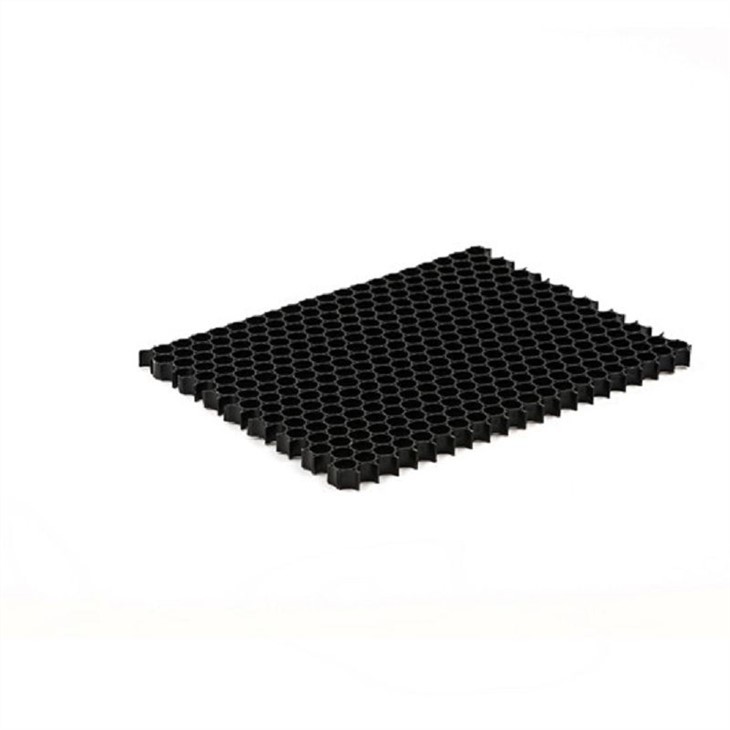
The unique honeycomb structure is another important aspect of the composition of PP honeycomb core. The honeycomb structure is formed by a series of hexagonal cells, which are interconnected to create a rigid and lightweight framework.
The hexagonal shape of the cells is a key factor in the strength and stability of the PP honeycomb core. Hexagons are the most efficient shape for filling a two - dimensional plane with the least amount of material. This means that the honeycomb structure can provide maximum strength with minimum weight. The interconnected nature of the cells also distributes the load evenly across the entire structure, making the PP honeycomb core highly resistant to bending and compression.
The size of the honeycomb cells can vary depending on the application requirements. Smaller cells generally provide higher strength and stiffness, but they also increase the weight of the core slightly. Larger cells, on the other hand, offer a lighter weight but may have lower strength. The wall thickness of the cells can also be adjusted to optimize the performance of the PP honeycomb core.
Applications of PP Honeycomb Core Based on Its Composition
The composition of PP honeycomb core makes it suitable for a wide range of applications.
Building Industry
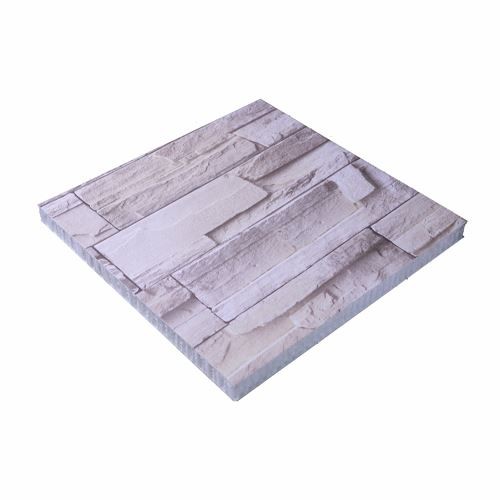
In the building industry, PP honeycomb core is used in Honeycomb - building - panels. The lightweight and high - strength properties of the PP honeycomb core make it an ideal material for constructing walls, partitions, and roofing panels. Its chemical resistance and thermal insulation properties also contribute to the durability and energy - efficiency of the buildings.
Transportation Industry
In the transportation industry, PP honeycomb core is used in the manufacturing of vehicle interiors, such as seats, door panels, and dashboard components. The lightweight nature of the PP honeycomb core helps to reduce the overall weight of the vehicle, which in turn improves fuel efficiency. Its high strength also ensures the safety and durability of the vehicle components.
Packaging Industry
PP honeycomb core is also used in the packaging industry. Its lightweight and shock - absorbing properties make it suitable for protecting fragile items during transportation. The chemical resistance of the polypropylene also ensures that the packaging can withstand exposure to various environmental conditions.
Conclusion
In conclusion, the composition of PP honeycomb core is a carefully designed combination of polypropylene and various additives, along with a unique honeycomb structure. The polypropylene provides the base material with its excellent chemical resistance, low density, and good thermal properties. Additives such as flame retardants, UV stabilizers, and fillers enhance the performance of the PP honeycomb core to meet specific application requirements. The honeycomb structure further optimizes the strength - to - weight ratio of the material.
If you are interested in our PP honeycomb core products and would like to discuss your specific requirements, please feel free to contact us for a detailed consultation and procurement negotiation.
References
- "Plastics Additives Handbook" by Hans Zweifel
- "Polymer Science and Technology" by Leonard A. Utracki
- Industry reports on the applications of PP honeycomb core in building, transportation, and packaging industries.