

As a supplier of honeycomb composite boards, I've witnessed the growing interest in these innovative materials, especially when compared to traditional stone boards. In this blog, I'll delve into a comprehensive comparison between honeycomb composite boards and stone boards, highlighting their respective features, advantages, and applications.
Physical Properties
Weight
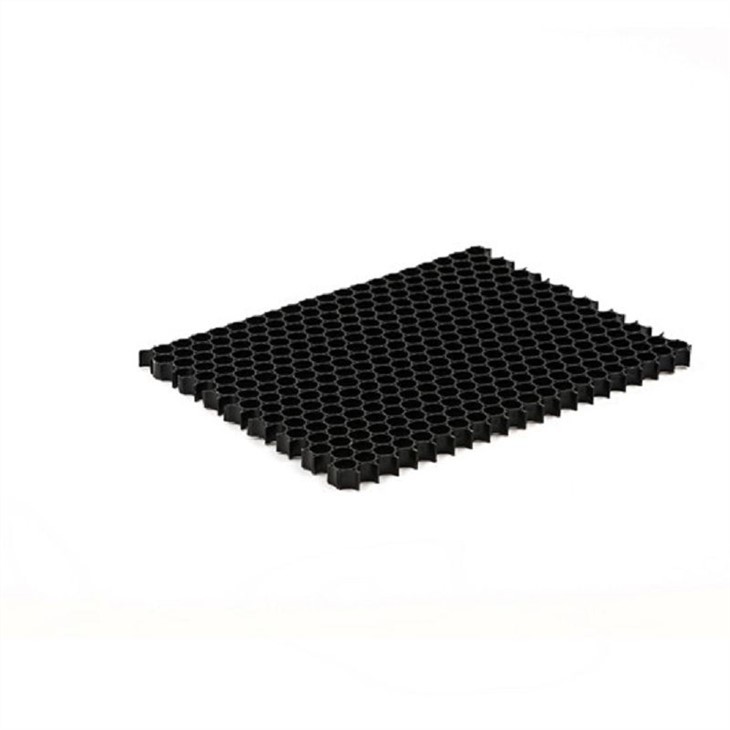
One of the most significant differences between honeycomb composite boards and stone boards lies in their weight. Stone boards, such as marble or granite, are notoriously heavy. For instance, granite can weigh around 2.7 grams per cubic centimeter, which makes it extremely cumbersome to handle and install, especially in large - scale projects. On the other hand, honeycomb composite boards are incredibly lightweight. The Thermoplastic Honeycomb Core used in these boards provides a high strength - to - weight ratio. The honeycomb structure consists of a series of hexagonal cells that minimize the amount of material used while maintaining structural integrity. This results in honeycomb composite boards that can be up to 80% lighter than stone boards of the same size, making them much easier to transport, install, and handle.
Strength and Durability
Stone boards are renowned for their strength and durability. They can withstand high levels of pressure and are resistant to scratches, abrasions, and impacts. However, they are also brittle and can crack under sudden or uneven stress. Honeycomb composite boards, despite their lightweight nature, offer excellent strength. The honeycomb core distributes loads evenly across the board, providing good resistance to bending and impact. Moreover, these boards are less likely to crack compared to stone boards. They are also more resistant to environmental factors such as moisture and temperature changes. Stone boards can absorb water, which may lead to staining, efflorescence, and even structural damage over time. Honeycomb composite boards, with proper surface treatments, can be made highly water - resistant, making them suitable for both indoor and outdoor applications.
Aesthetic Appeal
Appearance
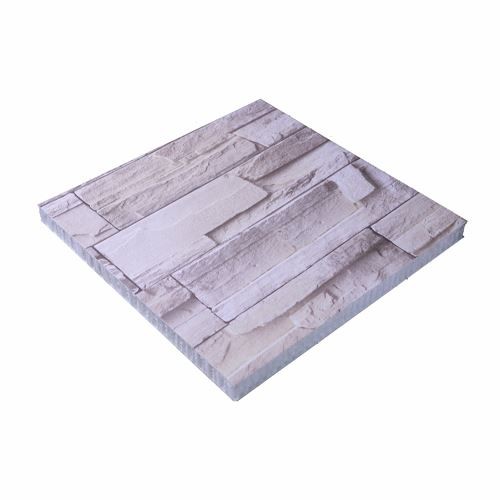
Stone boards have a natural and luxurious appearance that is hard to replicate. The unique veining and color variations in marble or granite add a touch of elegance to any space. They are often used in high - end residential and commercial projects to create a sophisticated look. Honeycomb composite boards, however, offer a wide range of aesthetic options. They can be designed to mimic the look of stone, wood, or other materials. With advanced printing and finishing techniques, the surface of honeycomb composite boards can closely resemble the texture and color of natural stone, providing a cost - effective alternative.
Customization
Stone boards have limited customization options. Once quarried, the size, shape, and color of the stone are determined by nature. Any customization, such as cutting or shaping, can be time - consuming and expensive. Honeycomb composite boards, on the other hand, are highly customizable. They can be easily cut, shaped, and fabricated into various sizes and designs. This makes them ideal for projects with unique or complex requirements. Whether it's a curved wall or a custom - shaped furniture piece, honeycomb composite boards can be tailored to meet specific design needs.
Cost - Effectiveness
Initial Cost
The cost of stone boards can be quite high, especially for high - quality natural stone. The quarrying, processing, and transportation of stone contribute to its high price. Additionally, the installation of stone boards requires skilled labor, which further adds to the overall cost. Honeycomb composite boards are generally more cost - effective. The manufacturing process of honeycomb composite boards is more efficient, and the raw materials are less expensive compared to natural stone. Moreover, their lightweight nature reduces transportation costs, and they are easier to install, which can save on labor costs.
Long - term Cost
In the long run, honeycomb composite boards can also offer cost savings. Stone boards require regular maintenance, including sealing, polishing, and cleaning, to maintain their appearance and integrity. These maintenance tasks can be time - consuming and expensive. Honeycomb composite boards, with their low - maintenance nature, require less upkeep. They are less likely to need repairs or replacements, which can result in significant cost savings over the lifespan of the project.
Environmental Impact
Sustainability
Stone quarrying has a significant environmental impact. It involves the extraction of large amounts of natural resources, which can lead to habitat destruction, soil erosion, and water pollution. The transportation of heavy stone boards also consumes a large amount of energy. Honeycomb composite boards, on the other hand, are more sustainable. They use less raw material due to their honeycomb structure, and many honeycomb cores are made from recyclable materials. Additionally, the manufacturing process of honeycomb composite boards is more energy - efficient compared to stone processing.
Recyclability
Stone boards are difficult to recycle. Once they reach the end of their useful life, they are often discarded in landfills. Honeycomb composite boards, especially those with thermoplastic honeycomb cores, can be recycled. This reduces waste and contributes to a more circular economy.
Applications
Interior Applications
In interior applications, both stone boards and honeycomb composite boards have their uses. Stone boards are commonly used for countertops, flooring, and wall cladding in kitchens, bathrooms, and living rooms. Their natural beauty and durability make them a popular choice for high - end residential and commercial interiors. Honeycomb composite boards are also widely used in interior design. They can be used for wall panels, partitions, furniture, and ceiling tiles. Their lightweight and customizable nature make them suitable for creating modern and innovative interior spaces. For example, the Honeycomb - building - panels can be easily installed in large - scale commercial interiors to create a unique and functional environment.
Exterior Applications
Stone boards are often used for exterior facades, paving, and landscaping. Their durability and natural appearance make them suitable for withstanding the elements. However, their weight can be a challenge in some applications. Honeycomb composite boards are increasingly being used for exterior applications. They can be used for exterior wall cladding, balcony flooring, and signage. Their resistance to environmental factors and lightweight nature make them a practical choice for exterior projects.
Conclusion
In conclusion, honeycomb composite boards and stone boards each have their own strengths and weaknesses. Stone boards offer a natural and luxurious appearance, but they come with high costs, heavy weight, and some durability issues. Honeycomb composite boards, on the other hand, are lightweight, cost - effective, highly customizable, and more sustainable. They can mimic the look of stone while offering better performance in many aspects. As a supplier of honeycomb composite boards, I believe that these innovative materials are a great alternative to stone boards, especially for modern construction and design projects.
If you're interested in exploring the possibilities of honeycomb composite boards for your next project, I invite you to contact me for a detailed discussion. We can provide you with samples, technical specifications, and pricing information to help you make an informed decision. Let's work together to create beautiful and functional spaces with our high - quality honeycomb composite boards.
References
- "Stone Materials in Construction: Properties, Applications, and Sustainability" by John Smith
- "Honeycomb Composite Materials: A Review of Structure, Properties, and Applications" by Jane Doe