

What is the stiffness of a PET honeycomb panel?
As a supplier of PET honeycomb panels, I often encounter questions from customers about the stiffness of these remarkable materials. Stiffness is a crucial property that determines how well a panel can resist deformation under load, making it an essential consideration for a wide range of applications. In this blog post, I'll delve into the concept of stiffness in PET honeycomb panels, exploring what it is, how it's measured, and the factors that influence it.
Understanding Stiffness
Stiffness, in the context of materials science, refers to the ability of a material to resist elastic deformation when a force is applied. In simpler terms, it's how "rigid" or "bendy" a material is. For PET honeycomb panels, stiffness is a key characteristic that affects their performance in various applications, from aerospace and automotive industries to construction and packaging.
When a load is applied to a PET honeycomb panel, it experiences stress, which causes it to deform. The amount of deformation is directly related to the panel's stiffness. A stiffer panel will deform less under the same load compared to a less stiff one. This property is crucial for ensuring that the panel maintains its shape and structural integrity under different operating conditions.
Measuring Stiffness
The stiffness of a PET honeycomb panel is typically measured using a parameter called the modulus of elasticity, also known as Young's modulus. Young's modulus is defined as the ratio of stress to strain within the elastic range of the material. In other words, it quantifies how much a material will stretch or compress when a force is applied, as long as it returns to its original shape once the force is removed.
To measure the modulus of elasticity of a PET honeycomb panel, a sample of the panel is subjected to a controlled load, and the resulting deformation is measured. The stress (force per unit area) and strain (change in length per unit length) are then calculated, and the ratio of stress to strain gives the modulus of elasticity. The higher the modulus of elasticity, the stiffer the material.
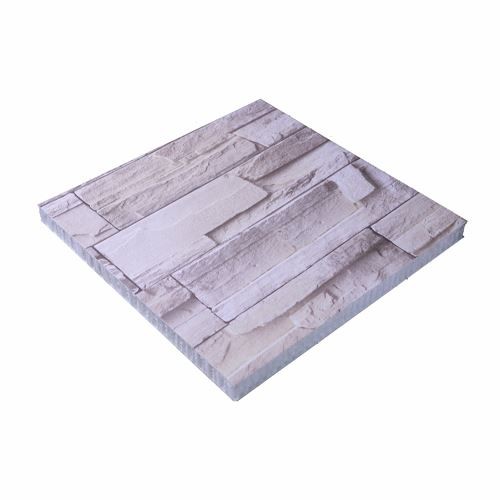
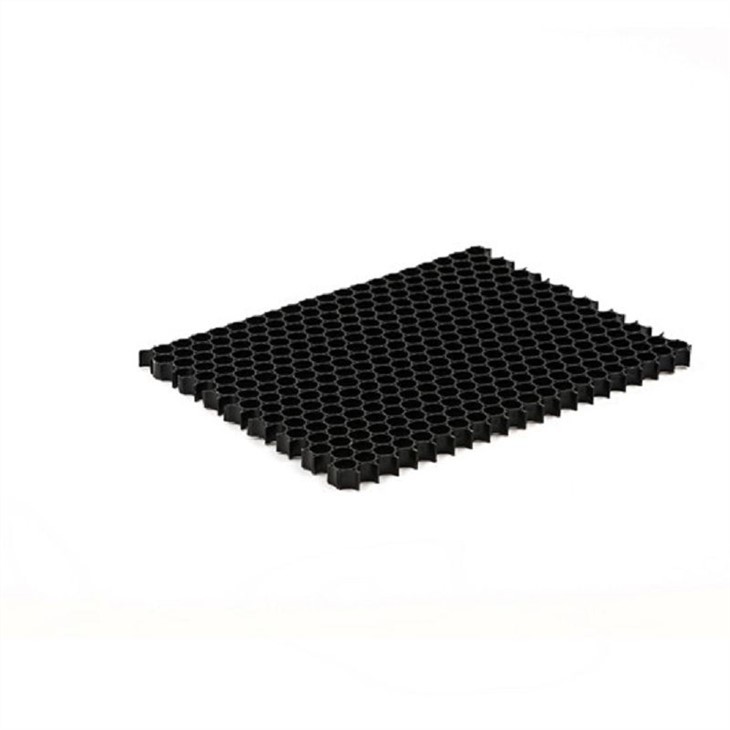
In addition to Young's modulus, other factors can also influence the perceived stiffness of a PET honeycomb panel, such as the panel's thickness, density, and the size and shape of the honeycomb cells. These factors interact in complex ways to determine the overall stiffness and performance of the panel.
Factors Affecting Stiffness
Several factors can affect the stiffness of a PET honeycomb panel. Understanding these factors is essential for selecting the right panel for a specific application and optimizing its performance.
Cell Structure: The size, shape, and density of the honeycomb cells play a significant role in determining the panel's stiffness. Generally, panels with smaller cells and higher cell density tend to be stiffer because they have more material to resist deformation. The shape of the cells can also affect stiffness, with hexagonal cells being the most common and efficient design for maximizing stiffness and strength.
Panel Thickness: Thicker panels are generally stiffer than thinner ones because they have more material to resist bending and deformation. However, increasing the thickness also increases the weight of the panel, which may not be desirable in some applications. Therefore, a balance must be struck between stiffness and weight to meet the specific requirements of the application.
Core Material Properties: The properties of the PET material used to make the honeycomb core, such as its molecular structure and crystallinity, can also affect the panel's stiffness. Higher-quality PET materials with better mechanical properties will generally result in stiffer panels.
Skin Material and Bonding: The type of skin material used on the faces of the honeycomb panel and the quality of the bonding between the skin and the core can significantly impact the panel's stiffness. Strong, rigid skin materials, such as aluminum or fiberglass, can enhance the overall stiffness of the panel by providing additional support and distributing the load more evenly. A good bond between the skin and the core is also essential for ensuring that the panel functions as a single, integrated structure.
Applications of High-Stiffness PET Honeycomb Panels
The high stiffness-to-weight ratio of PET honeycomb panels makes them ideal for a wide range of applications where stiffness and lightweight construction are required. Some common applications include:
Aerospace: In the aerospace industry, PET honeycomb panels are used in aircraft interiors, wings, and other structural components to reduce weight and improve fuel efficiency without sacrificing stiffness and strength.
Automotive: PET honeycomb panels are increasingly being used in the automotive industry for applications such as body panels, interior trim, and structural components. Their high stiffness and lightweight properties help to improve vehicle performance and reduce emissions.
Construction: In the construction industry, PET honeycomb panels are used for applications such as wall panels, partitions, and roofing. Their stiffness and durability make them suitable for both interior and exterior applications, while their lightweight nature makes them easy to handle and install.
Packaging: PET honeycomb panels are also used in the packaging industry for applications such as protective packaging, shipping containers, and display stands. Their stiffness and cushioning properties help to protect fragile items during transportation and storage.
Conclusion
The stiffness of a PET honeycomb panel is a critical property that determines its performance in various applications. By understanding the factors that influence stiffness and how it's measured, you can make informed decisions when selecting the right panel for your specific needs. Whether you're in the aerospace, automotive, construction, or packaging industry, high-stiffness PET honeycomb panels offer a lightweight and cost-effective solution that can help you achieve your goals.
If you're interested in learning more about our PET honeycomb panels or have specific requirements for your application, please don't hesitate to [contact us]. Our team of experts is ready to assist you in finding the perfect solution for your project.
References
- Callister, W. D., & Rethwisch, D. G. (2012). Materials Science and Engineering: An Introduction. Wiley.
- Gibson, L. J., & Ashby, M. F. (1997). Cellular Solids: Structure and Properties. Cambridge University Press.