

Hey there! I'm a supplier of PET honeycomb panels, and I'm super excited to take you behind the scenes and show you how these amazing panels are made. PET honeycomb panels are becoming increasingly popular in various industries due to their lightweight, high strength, and excellent insulation properties. So, let's dive right in!
Step 1: Raw Material Preparation
The first step in making a PET honeycomb panel is to gather the raw materials. We use polyethylene terephthalate (PET), which is a thermoplastic polymer. PET is a great choice because it's recyclable, has good chemical resistance, and can be easily processed.
We source high-quality PET resin pellets from reliable suppliers. These pellets are then carefully inspected to ensure they meet our strict quality standards. Any impurities or defective pellets are removed before the next step.
Step 2: Extrusion
Once the raw materials are ready, it's time for the extrusion process. The PET resin pellets are fed into an extruder, which is a machine that melts the pellets and forces them through a die to create a continuous sheet.
The extruder heats the PET resin to a specific temperature, usually around 260 - 280°C (500 - 536°F). This temperature is carefully controlled to ensure the resin melts evenly and has the right viscosity for extrusion.
As the molten PET exits the die, it forms a thin, flat sheet. This sheet is then cooled rapidly using a cooling system, which helps to solidify the PET and give it the desired shape.
Step 3: Honeycomb Formation
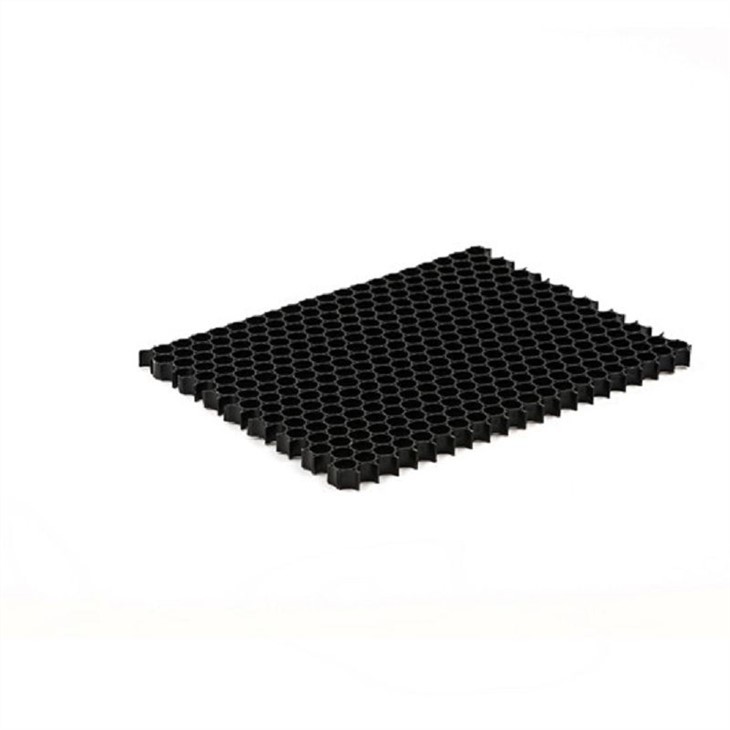
After the extrusion process, the next step is to create the honeycomb structure. There are a few different methods to do this, but one of the most common is the expansion method.
In the expansion method, the solidified PET sheet is first cut into strips of a specific width. These strips are then stacked on top of each other and bonded together using a special adhesive. The adhesive is carefully applied to ensure a strong and uniform bond between the strips.
Once the strips are bonded, the stack is placed in a mold. The mold has a honeycomb-shaped pattern, which will be transferred to the PET strips. The stack is then heated under pressure, causing the PET to expand and fill the honeycomb cavities in the mold.
This expansion process is crucial as it gives the honeycomb panel its unique structure and properties. The honeycomb structure provides excellent strength-to-weight ratio, making the panel lightweight yet strong enough to withstand various loads.
Step 4: Surface Lamination
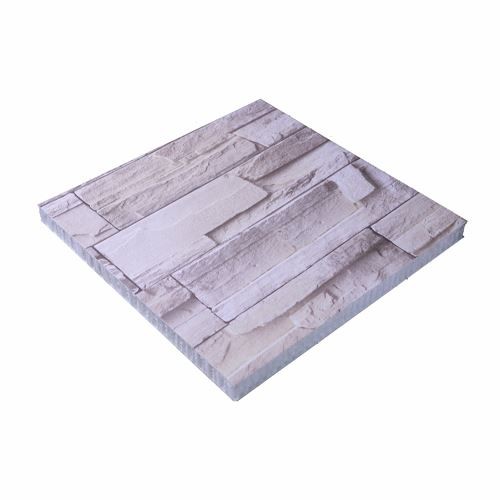
After the honeycomb structure is formed, the next step is to laminate the surfaces of the panel. Surface lamination not only enhances the appearance of the panel but also provides additional protection and functionality.
We offer a variety of surface materials for lamination, such as aluminum, fiberglass, and PVC. The choice of surface material depends on the specific application of the panel. For example, aluminum is a popular choice for applications where high strength and corrosion resistance are required, while PVC is often used for its aesthetic appeal and ease of cleaning.
The surface material is bonded to the honeycomb core using an adhesive. The bonding process is carefully controlled to ensure a strong and durable bond between the surface material and the honeycomb core.
Step 5: Cutting and Finishing
Once the surface lamination is complete, the panel is ready for cutting and finishing. The panel is cut to the desired size and shape using a cutting machine. This machine uses a sharp blade or laser to make precise cuts, ensuring that the panel meets the customer's specifications.
After cutting, the edges of the panel are finished to remove any rough or sharp edges. This can be done by sanding, beveling, or using a special edge treatment. The finishing process not only improves the appearance of the panel but also makes it safer to handle.
Step 6: Quality Control
Quality control is an essential part of the manufacturing process. At every stage of production, we conduct rigorous quality checks to ensure that the PET honeycomb panels meet our high standards.
We use a variety of testing methods, such as visual inspection, dimensional measurement, and mechanical testing. Visual inspection is used to check for any surface defects, such as scratches, bubbles, or uneven lamination. Dimensional measurement ensures that the panel has the correct size and shape. Mechanical testing, such as compression testing and flexural testing, is used to evaluate the strength and performance of the panel.
Any panels that do not meet our quality standards are rejected and recycled. This ensures that only the highest quality panels are delivered to our customers.
Applications of PET Honeycomb Panels
PET honeycomb panels have a wide range of applications in various industries. Some of the common applications include:
- Construction: PET honeycomb panels are used in building facades, interior partitions, and roofing systems. Their lightweight and high strength make them an ideal choice for reducing the overall weight of the building and improving energy efficiency. You can find more information about honeycomb building panels at Honeycomb-building-panels.
- Transportation: These panels are used in the automotive, aerospace, and marine industries. In the automotive industry, they are used for interior trim, door panels, and trunk liners. In the aerospace industry, they are used for aircraft interiors and structural components. In the marine industry, they are used for boat decks and cabin partitions.
- Furniture: PET honeycomb panels are used in the furniture industry to make lightweight and durable furniture pieces. They can be used for tabletops, cabinets, and chairs.
- Advertising and Display: These panels are also used in the advertising and display industry for making signs, exhibition stands, and display boards. Their smooth surface and lightweight make them easy to install and transport.
Why Choose Our PET Honeycomb Panels
As a supplier of PET honeycomb panels, we take pride in offering high-quality products at competitive prices. Here are some reasons why you should choose our panels:
- Quality Assurance: We have a strict quality control system in place to ensure that every panel we produce meets the highest standards. Our panels are tested thoroughly to ensure their strength, durability, and performance.
- Customization: We understand that every customer has unique requirements. That's why we offer customized solutions to meet your specific needs. Whether you need a specific size, shape, or surface finish, we can work with you to create the perfect panel.
- Environmental Friendly: PET is a recyclable material, which means our panels are environmentally friendly. By choosing our panels, you can contribute to a more sustainable future.
- Technical Support: Our team of experts is always available to provide you with technical support and advice. Whether you have questions about installation, maintenance, or product specifications, we're here to help.
Contact Us for Procurement
If you're interested in purchasing PET honeycomb panels or have any questions about our products, please don't hesitate to contact us. We're always happy to discuss your requirements and provide you with a free quote. Our panels are made with the latest technology and highest quality materials, ensuring that you get the best value for your money. Whether you're a small business or a large corporation, we can supply you with the right quantity of panels at the right price. So, why wait? Reach out to us today and let's start a great partnership!
References
- "Plastics Technology Handbook" by Howard S. Katz
- "Composite Materials Handbook" by Samuel T. Peters