

Yo, what's up everyone! As a supplier of PET honeycomb panels, I get asked a ton about the optical properties of these panels. So, I thought I'd sit down and share everything I know about it.
Let's start with the basics. PET, or polyethylene terephthalate, is a common thermoplastic polymer resin. When it's made into a honeycomb panel, it has some pretty interesting optical characteristics. One of the first things you'll notice is its transparency. PET honeycomb panels can be made to be highly transparent, which is super useful in a lot of applications.
For instance, in architectural settings, transparent PET honeycomb panels can be used as partitions or skylights. They let in natural light, creating a bright and airy atmosphere inside a building. This not only saves on energy costs but also gives the space a modern and open feel. You can check out some examples of how these panels are used in buildings on the Honeycomb - building - panels page.
Now, transparency isn't the only optical property. The way light is scattered within the panel is also important. PET honeycomb panels have a unique internal structure. The honeycomb core acts like a series of tiny light guides. When light enters the panel, it gets refracted and scattered in different directions. This can create a soft, diffused lighting effect.
In lighting fixtures, this diffused light is a game - changer. Instead of having harsh, direct light, you get a more even and gentle illumination. It's great for places like offices, where you don't want glare on computer screens, or in restaurants, where a cozy ambiance is key.
Another aspect is the reflectivity of PET honeycomb panels. Depending on the surface treatment, the panels can have different levels of reflectivity. A smooth - finished panel will reflect more light compared to a matte - finished one. A high - reflectivity panel can be used in applications where you want to bounce light around a space, like in a photography studio or a warehouse. On the other hand, a low - reflectivity, matte - finished panel is better for areas where you want to reduce reflections, such as in a museum display case.
The color of the PET honeycomb panel also affects its optical properties. You can get these panels in a variety of colors. A colored panel will absorb and transmit light differently based on its hue. For example, a blue panel will absorb most of the light in the red and green parts of the spectrum and transmit more blue light. This can be used creatively in interior design to add a splash of color and create a specific mood.
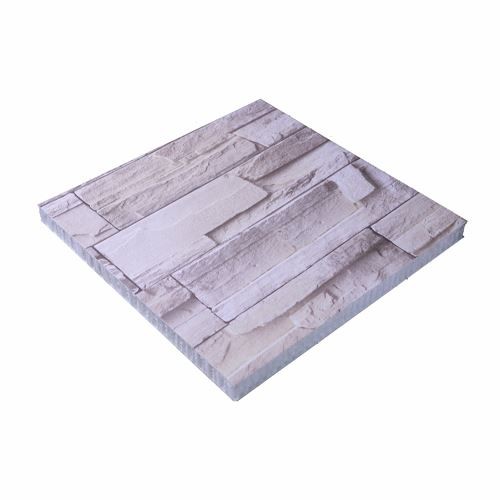
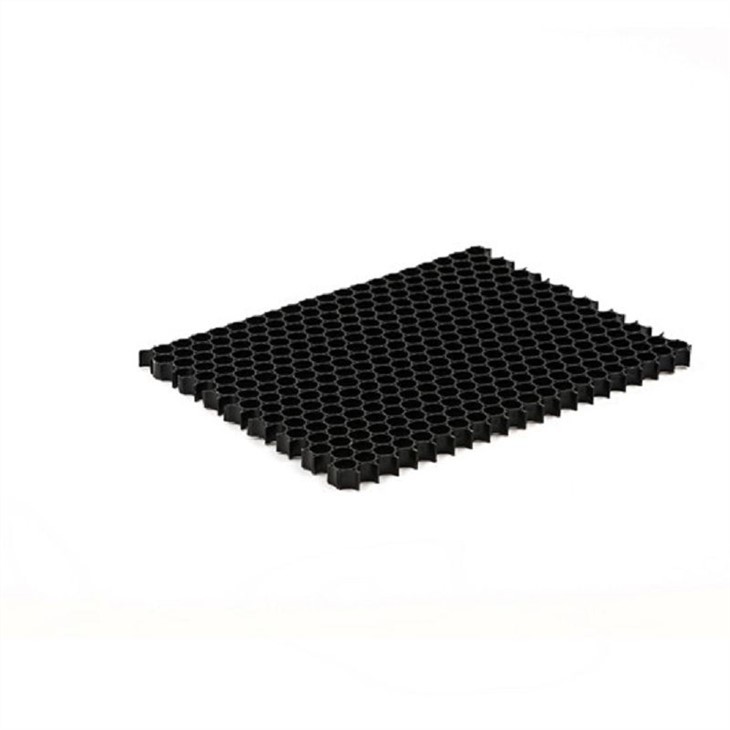
Now, let's talk about how these optical properties are related to the manufacturing process. The thickness of the PET layers and the size of the honeycomb cells play a big role. A thicker panel will generally absorb more light, reducing its overall transparency. And if the honeycomb cells are larger, the light scattering effect will be more pronounced.
We, as a supplier, have a lot of control over these factors during production. We can adjust the cell size, layer thickness, and surface finish to meet the specific optical requirements of our customers. Whether you need a highly transparent panel for a modern art installation or a panel with a specific color and light - scattering effect for a commercial building, we've got you covered.
When it comes to comparing PET honeycomb panels with other materials in terms of optical properties, they have some clear advantages. Compared to glass, PET honeycomb panels are much lighter. This makes them easier to install and transport. And while glass can shatter, PET is more impact - resistant, which is a big plus in many applications.
Compared to traditional plastic sheets, the honeycomb structure of PET panels gives them better light - handling capabilities. The internal structure helps to manage light in a more efficient way, resulting in better - quality illumination.
The optical properties of PET honeycomb panels also have implications for their use in the automotive industry. In car interiors, these panels can be used for dashboard covers or door panels. Their ability to diffuse light can reduce glare and make the driving experience more comfortable. And in terms of aesthetics, the ability to customize the color and transparency allows car manufacturers to create unique and stylish interiors.
In the aviation industry, the lightweight nature of PET honeycomb panels combined with their optical properties makes them an attractive option. They can be used in cabin partitions or overhead storage compartments. The transparency or light - diffusing capabilities can enhance the overall look and feel of the cabin, while the low weight helps to reduce fuel consumption.
The durability of PET honeycomb panels is also worth mentioning in relation to their optical properties. Over time, the panels maintain their optical characteristics better than some other materials. They are resistant to yellowing and degradation from UV light. This means that the transparency, color, and light - scattering properties will stay consistent for a long time, which is crucial for long - term applications.
We've been working hard to improve the optical properties of our PET honeycomb panels even further. We're constantly researching new manufacturing techniques and surface treatments. For example, we're looking into nanocoatings that can enhance the anti - reflective properties of the panels. This would be a huge advantage in applications where reflections are a major issue.
If you're in the market for PET honeycomb panels and are interested in their optical properties, we'd love to have a chat with you. Whether you're an architect, a lighting designer, or a product manufacturer, we can work with you to find the perfect panel for your project. Just reach out to us and let's start a conversation about how our PET honeycomb panels can meet your specific optical needs.
In conclusion, the optical properties of PET honeycomb panels are diverse and offer a lot of possibilities for different applications. From transparency and light diffusion to reflectivity and color, these panels can be tailored to fit a wide range of requirements. So, if you're looking for a high - performance, versatile material with great optical characteristics, give us a shout. We're here to help you make the most of these amazing panels.
If you want to learn more about the types of honeycomb cores we offer, check out our Thermoplastic Honeycomb Core page.
If you're interested in starting a project with us or just want to get more information, don't hesitate to reach out. We're always happy to discuss your needs and see how we can provide the best PET honeycomb panels for you.
References
- "Plastic Materials in Modern Industry" - A comprehensive book on the properties and applications of various plastics, including PET.
- "Optics and Photonics Handbook" - This handbook provides in - depth knowledge about light - material interactions, which is relevant to understanding the optical properties of PET honeycomb panels.