

Hey there! As a supplier of PET honeycomb panels, I often get asked about the flatness of these panels. So, I thought I'd take some time to explain what it means and why it's so important.
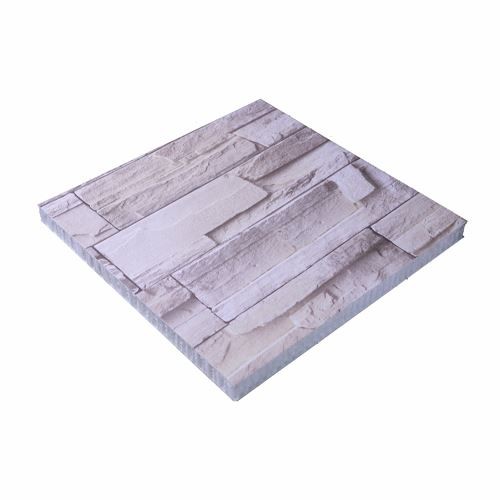
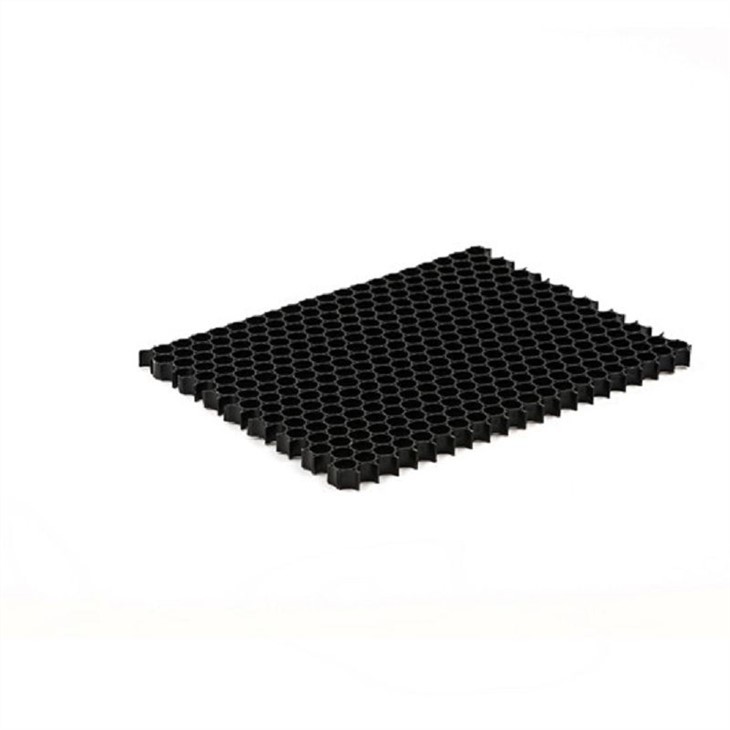
First off, let's talk about what a PET honeycomb panel is. It's a composite material made up of a honeycomb core sandwiched between two face sheets. The honeycomb core is typically made from PET (polyethylene terephthalate), a strong and lightweight plastic. The face sheets can be made from a variety of materials, including aluminum, fiberglass, or wood.
Now, when we talk about the flatness of a PET honeycomb panel, we're referring to how straight and even the surface of the panel is. A flat panel is one that doesn't have any bumps, dents, or warping. This is important for a few reasons.
For starters, a flat panel is much easier to work with. If you're using the panel for a construction project, for example, you'll want it to be as flat as possible so that it fits together properly with other materials. A panel that's not flat can cause problems during installation, leading to gaps or uneven surfaces.
In addition, a flat panel is more aesthetically pleasing. Whether you're using the panel for a commercial or residential application, you'll want it to look good. A panel that's warped or has bumps can make your project look unprofessional or unfinished.
So, how do we measure the flatness of a PET honeycomb panel? There are a few different methods, but one of the most common is to use a straightedge. A straightedge is a long, flat piece of metal or plastic that you can place on top of the panel to see if it's straight. If there are any gaps between the straightedge and the panel, it means the panel isn't perfectly flat.
Another method is to use a laser level. A laser level projects a straight line onto the panel, allowing you to see if it's level and straight. This method is more accurate than using a straightedge, but it's also more expensive.
At our company, we take flatness very seriously. We use state-of-the-art manufacturing processes and equipment to ensure that our PET honeycomb panels are as flat as possible. We also have a rigorous quality control process in place to check the flatness of every panel before it leaves our factory.
But flatness isn't the only thing that matters when it comes to PET honeycomb panels. There are a few other factors that you should consider as well.
One of these factors is the thickness of the panel. The thickness of the panel can affect its strength and stiffness. A thicker panel will generally be stronger and stiffer than a thinner panel, but it will also be heavier.
Another factor is the density of the honeycomb core. The density of the honeycomb core can affect the panel's weight, strength, and insulation properties. A higher density core will generally be stronger and heavier than a lower density core, but it will also provide better insulation.
Finally, you should consider the type of face sheets that are used on the panel. The face sheets can affect the panel's appearance, durability, and weather resistance. For example, aluminum face sheets are lightweight and corrosion-resistant, while fiberglass face sheets are strong and fire-resistant.
So, there you have it! That's what the flatness of a PET honeycomb panel is and why it's so important. If you're in the market for PET honeycomb panels, I encourage you to do your research and choose a supplier that takes flatness and quality seriously.
At our company, we're committed to providing our customers with the highest quality PET honeycomb panels at the most competitive prices. We offer a wide range of panel sizes, thicknesses, and densities to meet your specific needs. And if you have any questions or need help choosing the right panel for your project, our team of experts is always here to assist you.
If you're interested in learning more about our PET honeycomb panels or would like to place an order, please don't hesitate to [contact us]. We'd love to hear from you and help you with your next project.
References:
- "Honeycomb Building Panels." Honeycomb-building-panels
- "Thermoplastic Honeycomb Core." Thermoplastic Honeycomb Core