

Hey there! As a supplier of PP Honeycomb Panels, I often get asked about the impact resistance of these amazing products. So, I thought I'd take the time to dive deep into this topic and share everything you need to know.
First off, let's understand what PP Honeycomb Panels are. These panels are made from polypropylene (PP), a thermoplastic polymer known for its excellent chemical resistance, lightweight nature, and high strength-to-weight ratio. The honeycomb structure in these panels is what gives them their unique properties. It's like nature's own engineering marvel, providing maximum strength with minimum material usage.
Now, let's talk about impact resistance. Impact resistance refers to a material's ability to withstand sudden forces or blows without breaking, cracking, or deforming significantly. In the case of PP Honeycomb Panels, their impact resistance is quite impressive, and here's why.
Structure and Design
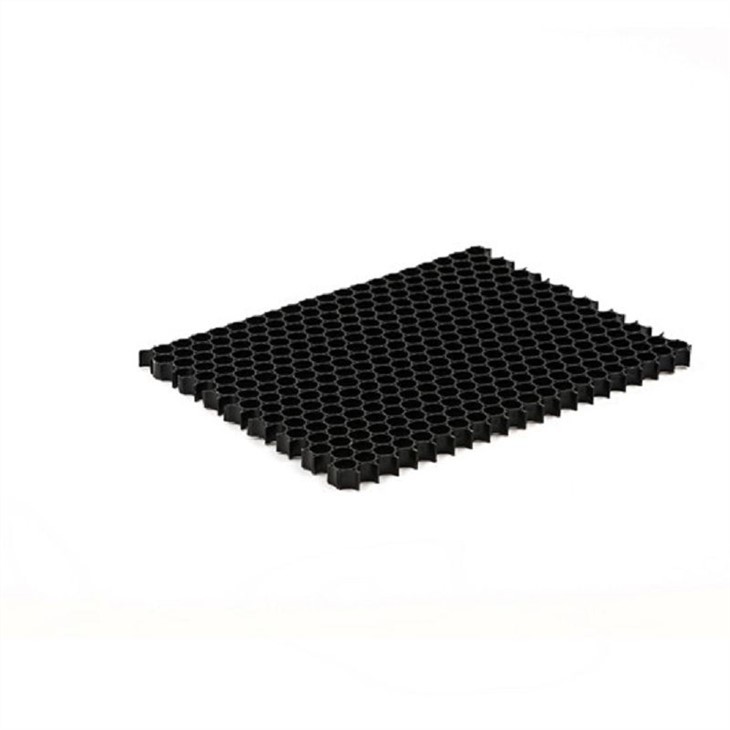
The honeycomb structure plays a crucial role in the panel's impact resistance. The hexagonal cells in the honeycomb act as a series of small, interconnected columns. When an impact occurs, these cells distribute the force evenly across the panel. Instead of concentrating the force at a single point, which could lead to damage, the honeycomb structure spreads it out. This means that even if you hit the panel with a significant amount of force, the chances of it breaking are relatively low.
For example, imagine you have a regular flat panel and a PP Honeycomb Panel of the same size and material thickness. If you were to drop a heavy object on both, the flat panel might crack or break under the impact. But the PP Honeycomb Panel, thanks to its honeycomb structure, would be more likely to absorb the impact and remain intact.
Material Properties
Polypropylene itself is a tough and resilient material. It has good flexibility, which allows it to bend slightly under impact rather than shattering. This flexibility helps the panel to dissipate the energy of the impact. Additionally, polypropylene has a high resistance to fatigue, meaning it can withstand repeated impacts over time without losing its structural integrity.
Let's say you have a PP Honeycomb Panel installed in a high-traffic area where it's likely to be bumped into regularly. The panel's ability to resist fatigue ensures that it will continue to perform well and maintain its impact resistance over the long term.
Applications and Impact Resistance
The high impact resistance of PP Honeycomb Panels makes them suitable for a wide range of applications.
Building and Construction
In the construction industry, these panels are used for various purposes. They can be used as interior partitions, wall cladding, or even as roofing materials. In areas where there's a risk of impact, such as near loading docks or in industrial buildings, PP Honeycomb Panels can provide an extra layer of protection. For instance, if a forklift accidentally hits a wall made of these panels, the panel's impact resistance will prevent it from getting severely damaged. You can learn more about their use in building applications on our Honeycomb-building-panels page.
Transportation
PP Honeycomb Panels are also popular in the transportation sector. They can be used in the interiors of vehicles, such as buses, trains, and airplanes. In the event of an impact during transportation, the panels can help to protect passengers and equipment. Their lightweight nature also makes them ideal for use in vehicles, as it helps to reduce the overall weight and improve fuel efficiency.
Packaging
When it comes to packaging, impact resistance is crucial. PP Honeycomb Panels can be used to create protective packaging for fragile items. They can absorb the shock of impacts during shipping and handling, ensuring that the contents inside remain safe. Whether it's electronics, glassware, or other delicate products, these panels provide excellent protection.
Factors Affecting Impact Resistance
While PP Honeycomb Panels generally have good impact resistance, there are a few factors that can affect this property.
Cell Size
The size of the honeycomb cells can influence the panel's impact resistance. Smaller cells tend to provide better impact resistance because they can distribute the force more effectively. However, smaller cells also mean more material is used, which can increase the weight and cost of the panel. So, it's a balance between impact resistance and other factors like weight and cost.
Panel Thickness
Thicker panels generally have better impact resistance than thinner ones. A thicker panel can absorb more energy from an impact before it starts to deform or break. However, just like with cell size, increasing the thickness also increases the weight and cost of the panel. So, the appropriate thickness needs to be chosen based on the specific application and requirements.
Temperature
Temperature can also have an impact on the impact resistance of PP Honeycomb Panels. At lower temperatures, polypropylene becomes more brittle, which can reduce its impact resistance. On the other hand, at higher temperatures, the material may become softer and more prone to deformation. So, it's important to consider the operating temperature when using these panels.
Testing and Standards
To ensure the quality and impact resistance of our PP Honeycomb Panels, we conduct various tests. These tests are designed to simulate real-world conditions and measure the panel's ability to withstand impacts.
One common test is the drop test. In this test, a weighted object is dropped from a certain height onto the panel, and the damage to the panel is evaluated. Another test is the pendulum impact test, where a swinging pendulum strikes the panel with a known amount of force. These tests help us to determine the panel's impact resistance rating and ensure that it meets the required standards.
Why Choose Our PP Honeycomb Panels?
As a supplier, we take pride in offering high-quality PP Honeycomb Panels with excellent impact resistance. Our panels are manufactured using the latest technology and high-grade polypropylene materials. We pay close attention to every detail in the production process to ensure that each panel meets our strict quality standards.
Whether you need panels for a small project or a large-scale industrial application, we can provide you with the right solution. Our team of experts is always ready to assist you in choosing the best panel for your specific needs.
If you're interested in learning more about our PP Honeycomb Panels or have any questions about their impact resistance, feel free to reach out to us. We'd love to have a chat with you and discuss how our panels can benefit your project. You can also explore our Thermoplastic Honeycomb Core page to get more information about the core technology behind our panels.
In conclusion, the impact resistance of PP Honeycomb Panels is a key feature that makes them a great choice for many applications. Their unique structure, combined with the properties of polypropylene, allows them to withstand impacts and provide long-lasting performance. So, if you're in the market for a durable and impact-resistant panel, give our PP Honeycomb Panels a try.
References
- ASTM International. (2023). Standard test methods for impact resistance of flat rigid plastics by means of a falling dart (Tup). ASTM D1709 - 23.
- ISO. (2022). Plastics - Determination of izod impact strength. ISO 180:2022.