

Flexural strength is a critical mechanical property that measures a material's ability to resist deformation under bending loads. When it comes to PET honeycomb panels, understanding their flexural strength is essential for various applications, from aerospace and automotive to construction and packaging. As a supplier of PET honeycomb panels, I am often asked about this property and its implications. In this blog, I will delve into the concept of flexural strength, explore how it is measured in PET honeycomb panels, and discuss the factors that influence it.
What is Flexural Strength?
Flexural strength, also known as bending strength, is the maximum stress that a material can withstand before it breaks or fails under a bending load. It is a measure of the material's ability to resist deformation when subjected to a force that causes it to bend. In the case of PET honeycomb panels, flexural strength is particularly important because these panels are often used in applications where they need to support loads without excessive bending or breaking.
The flexural strength of a material is typically determined through a three-point or four-point bending test. In a three-point bending test, a specimen of the material is placed on two supports and a load is applied at the center of the specimen. The load is gradually increased until the specimen breaks or reaches a predetermined level of deformation. The flexural strength is then calculated based on the maximum load applied and the dimensions of the specimen.
Measuring the Flexural Strength of PET Honeycomb Panels
The flexural strength of PET honeycomb panels can be measured using the same principles as for other materials. However, due to the unique structure of honeycomb panels, some additional considerations need to be taken into account.
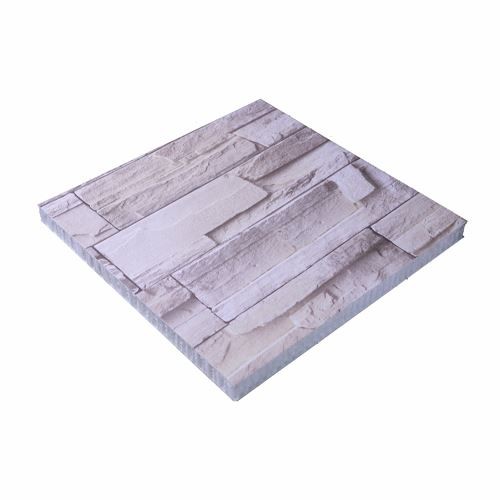
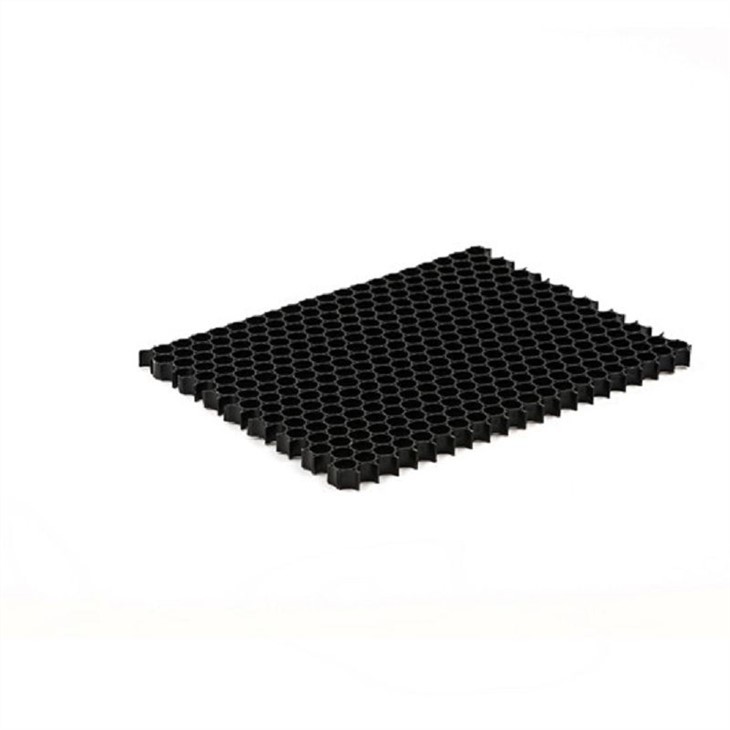
One of the key factors that affect the flexural strength of PET honeycomb panels is the cell size and density of the honeycomb core. The cell size refers to the dimensions of the individual cells in the honeycomb structure, while the density refers to the mass of the honeycomb core per unit volume. Generally, smaller cell sizes and higher densities result in higher flexural strengths because they provide more support and resistance to bending.
Another important factor is the thickness and material properties of the face sheets. The face sheets are the layers of material that are bonded to the top and bottom of the honeycomb core. They play a crucial role in distributing the load and protecting the honeycomb core from damage. Thicker face sheets and materials with higher stiffness and strength can increase the flexural strength of the panel.
To measure the flexural strength of a PET honeycomb panel, a specimen is typically cut from the panel and prepared according to the relevant standards. The specimen is then placed on two supports and a load is applied at the center of the specimen using a testing machine. The load is gradually increased until the specimen breaks or reaches a predetermined level of deformation. The flexural strength is calculated based on the maximum load applied and the dimensions of the specimen.
Factors Influencing the Flexural Strength of PET Honeycomb Panels
In addition to the cell size, density, face sheet thickness, and material properties, several other factors can influence the flexural strength of PET honeycomb panels. These include:
- Orientation: The orientation of the honeycomb cells relative to the direction of the bending load can have a significant impact on the flexural strength. Panels with the cells oriented parallel to the load direction generally have higher flexural strengths than those with the cells oriented perpendicular to the load direction.
- Bonding quality: The quality of the bond between the honeycomb core and the face sheets is crucial for the overall strength and performance of the panel. A strong and durable bond ensures that the load is effectively transferred between the core and the face sheets, resulting in higher flexural strengths.
- Environmental conditions: The flexural strength of PET honeycomb panels can be affected by environmental conditions such as temperature, humidity, and exposure to chemicals. High temperatures and humidity can cause the material to soften and lose its strength, while exposure to chemicals can cause degradation and damage to the panel.
- Loading rate: The rate at which the load is applied can also affect the flexural strength of the panel. In general, panels tested at higher loading rates tend to have higher flexural strengths than those tested at lower loading rates.
Applications of PET Honeycomb Panels Based on Flexural Strength
The high flexural strength of PET honeycomb panels makes them suitable for a wide range of applications where lightweight and strong materials are required. Some of the common applications include:
- Aerospace: PET honeycomb panels are used in the aerospace industry for interior components such as cabin partitions, ceilings, and floors. Their high strength-to-weight ratio and excellent fire resistance make them ideal for these applications.
- Automotive: In the automotive industry, PET honeycomb panels are used for interior and exterior components such as door panels, trunk liners, and engine covers. Their lightweight and stiffness help to improve fuel efficiency and reduce emissions.
- Construction: PET honeycomb panels are increasingly being used in the construction industry for applications such as wall cladding, roofing, and flooring. Their high flexural strength and durability make them a cost-effective alternative to traditional building materials.
- Packaging: The high flexural strength of PET honeycomb panels makes them suitable for packaging applications where protection and support are required. They are commonly used for packaging fragile and heavy items such as electronics, glassware, and machinery.
Conclusion
In conclusion, the flexural strength of PET honeycomb panels is a critical property that determines their suitability for various applications. By understanding the factors that influence flexural strength and how it is measured, designers and engineers can select the right panel for their specific needs. As a supplier of PET honeycomb panels, I am committed to providing high-quality products with excellent flexural strength and other mechanical properties.
If you are interested in learning more about our PET honeycomb panels or have any questions about their flexural strength or other properties, please do not hesitate to contact us. We would be happy to discuss your requirements and provide you with the information and support you need. You can also visit our website to learn more about our Thermoplastic Honeycomb Core and Honeycomb-building-panels.
References
- ASTM D7249/D7249M - 18 Standard Test Method for Flexural Properties of Sandwich Constructions.
- ISO 14125:1998 Fibre-reinforced plastics composites -- Determination of flexural properties.
- Gibson, L. J., & Ashby, M. F. (1997). Cellular solids: Structure and properties. Cambridge university press.