

As a supplier of PP Honeycomb Panels, I often encounter questions from clients regarding the various properties of our products. One of the most frequently asked questions is about the coefficient of thermal expansion of PP Honeycomb Panels. In this blog post, I will delve into this topic, explaining what the coefficient of thermal expansion is, how it affects PP Honeycomb Panels, and why it matters to our customers.
Understanding the Coefficient of Thermal Expansion
The coefficient of thermal expansion (CTE) is a measure of how much a material expands or contracts when its temperature changes. It is defined as the fractional change in length or volume per unit change in temperature. In simpler terms, it tells us how much a material will grow or shrink when heated or cooled.
There are two main types of CTE: linear and volumetric. Linear CTE (α) measures the change in length in one dimension, while volumetric CTE (β) measures the change in volume. For most practical purposes, especially when dealing with flat panels like PP Honeycomb Panels, the linear CTE is the more relevant parameter.
The CTE is typically expressed in units of per degree Celsius (°C⁻¹) or per degree Fahrenheit (°F⁻¹). A higher CTE means that the material will expand or contract more significantly with temperature changes.
Coefficient of Thermal Expansion of PP Honeycomb Panels
PP, or polypropylene, is a thermoplastic polymer commonly used in the manufacturing of honeycomb panels. The CTE of pure polypropylene is relatively high compared to some other materials, typically ranging from 100 x 10⁻⁶ to 200 x 10⁻⁶ °C⁻¹. However, the CTE of PP Honeycomb Panels can vary depending on several factors, including the specific formulation of the polypropylene, the thickness and density of the panel, and the presence of any additives or reinforcements.
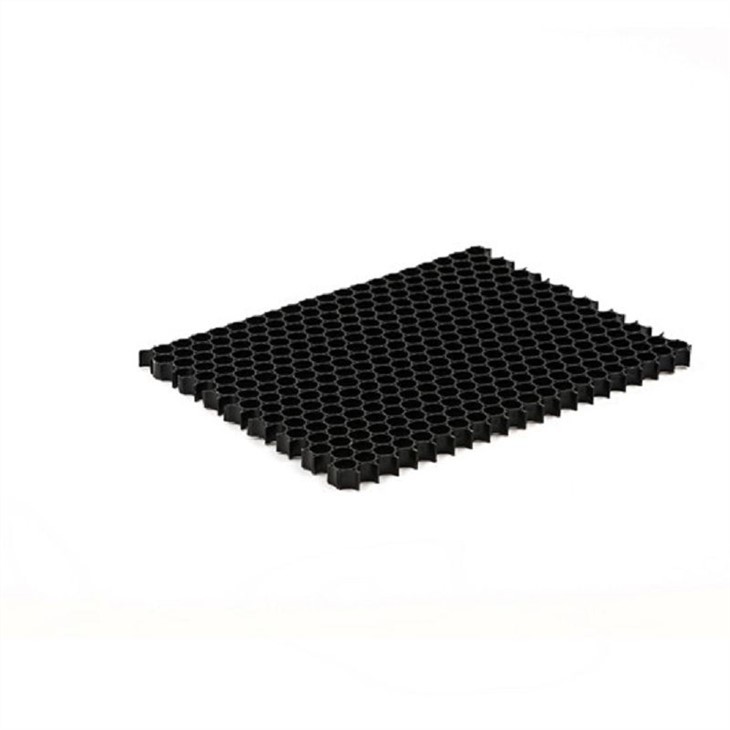
In general, the CTE of our PP Honeycomb Panels falls within the range of 80 x 10⁻⁶ to 150 x 10⁻⁶ °C⁻¹. This value is influenced by the unique honeycomb structure of the panel, which provides some degree of flexibility and can help to mitigate the effects of thermal expansion. The honeycomb core acts as a buffer, allowing the panel to expand and contract without causing significant warping or distortion.
Why the Coefficient of Thermal Expansion Matters
The CTE of PP Honeycomb Panels is an important consideration for several reasons. Firstly, it affects the dimensional stability of the panels. In applications where precise dimensions are critical, such as in the construction of buildings or the manufacturing of precision equipment, a high CTE can lead to problems. For example, if a PP Honeycomb Panel is installed in a building and the temperature changes significantly, the panel may expand or contract, causing gaps or misalignments in the structure.
Secondly, the CTE can impact the performance and durability of the panels. When a material expands and contracts repeatedly due to temperature changes, it can experience stress and fatigue, which can lead to cracking or other forms of damage over time. By understanding the CTE of our PP Honeycomb Panels, we can design and manufacture products that are better able to withstand these thermal stresses, ensuring long-term performance and reliability.
Finally, the CTE can also affect the installation and handling of the panels. If the CTE is too high, special precautions may need to be taken during installation to allow for thermal expansion and contraction. This can add complexity and cost to the installation process. By providing accurate information about the CTE of our panels, we can help our customers to plan and execute their projects more effectively.
Applications and Considerations
PP Honeycomb Panels are used in a wide range of applications, each with its own unique requirements and considerations. In the construction industry, for example, Honeycomb-building-panels are often used for interior partitions, wall cladding, and roofing. In these applications, the CTE of the panels needs to be carefully considered to ensure that they can withstand the temperature variations typically encountered in different climates.
In the automotive and aerospace industries, Thermoplastic Honeycomb Core is used for lightweight structural components, such as door panels, seat backs, and aircraft interiors. In these applications, the CTE is important for maintaining the structural integrity and dimensional accuracy of the components, especially under extreme temperature conditions.
When selecting PP Honeycomb Panels for a specific application, it is important to consider the temperature range that the panels will be exposed to, as well as the expected frequency and magnitude of temperature changes. Our technical team can provide guidance on the appropriate panel specifications and installation methods to ensure optimal performance in different environments.
Conclusion
In conclusion, the coefficient of thermal expansion is an important property of PP Honeycomb Panels that can have a significant impact on their performance, durability, and dimensional stability. By understanding the CTE of our panels and how it is affected by various factors, we can provide our customers with high-quality products that meet their specific needs.
If you are interested in learning more about our PP Honeycomb Panels or have any questions about the coefficient of thermal expansion, please do not hesitate to contact us. We are always happy to provide technical support and assistance to help you make the right choice for your project. Whether you are a contractor, architect, engineer, or manufacturer, we are committed to providing you with the best possible solutions and service.
References
- "Polypropylene: Properties, Processing, and Applications" by Charles A. Harper
- "Thermal Expansion of Polymers" in the Handbook of Polymer Science and Technology