

As a seasoned supplier of Honeycomb Composite Boards, I've encountered numerous inquiries regarding the bending stiffness of these remarkable materials. In this blog post, I aim to shed light on what bending stiffness is, its significance in honeycomb composite boards, and how it impacts various applications.
Understanding Bending Stiffness
Bending stiffness is a fundamental mechanical property that describes a material's resistance to bending under an applied load. It is a measure of how much a material will deform when subjected to a bending force. In engineering terms, bending stiffness is often represented by the product of the material's modulus of elasticity (E) and its moment of inertia (I), denoted as EI.
The modulus of elasticity, also known as Young's modulus, is a measure of a material's stiffness or its ability to resist elastic deformation. It represents the ratio of stress to strain within the elastic range of the material. A higher modulus of elasticity indicates a stiffer material that will deform less under a given load.
The moment of inertia, on the other hand, is a geometric property that depends on the shape and dimensions of the cross-section of the material. It quantifies the distribution of mass around the axis of bending and plays a crucial role in determining the material's resistance to bending. A larger moment of inertia implies a greater resistance to bending.
Bending Stiffness in Honeycomb Composite Boards
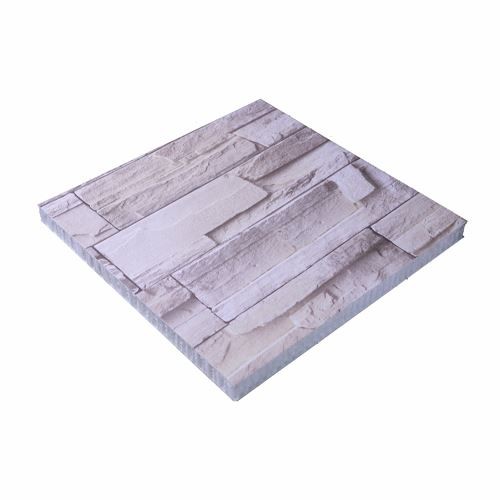
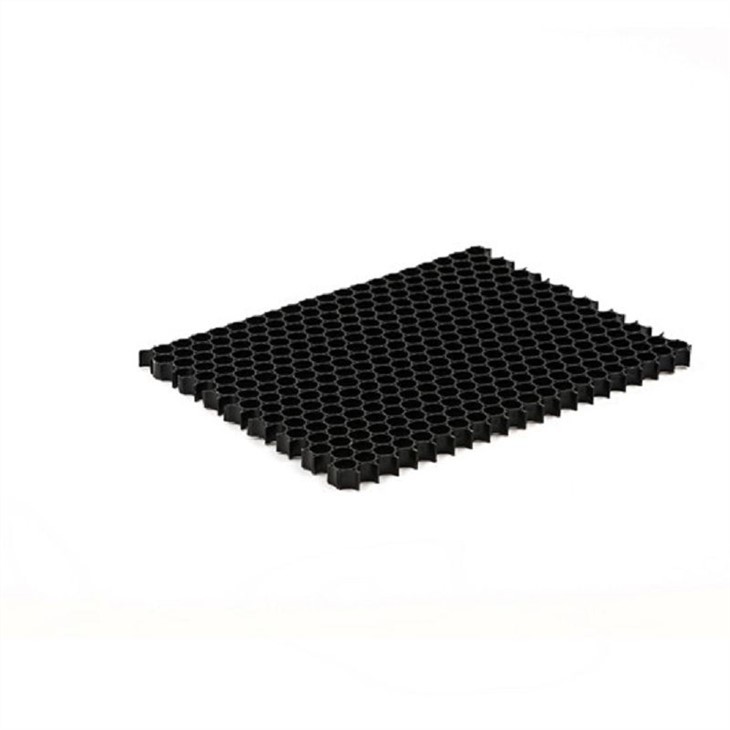
Honeycomb composite boards are a type of sandwich structure consisting of two outer face sheets bonded to a lightweight honeycomb core. The face sheets provide the board with strength and stiffness, while the honeycomb core acts as a spacer, increasing the moment of inertia and reducing the weight of the board.
The bending stiffness of honeycomb composite boards is primarily determined by the properties of the face sheets, the honeycomb core, and the bonding between them. The face sheets are typically made of materials such as aluminum, fiberglass, or carbon fiber, which have high moduli of elasticity and can withstand significant bending forces. The honeycomb core, on the other hand, is usually made of materials such as paper, aluminum, or thermoplastic, which have low densities and can provide excellent energy absorption and insulation properties.
The design of the honeycomb core also plays a crucial role in determining the bending stiffness of the board. The cell size, cell shape, and wall thickness of the honeycomb core can all affect the moment of inertia and the overall stiffness of the board. For example, a honeycomb core with a smaller cell size and thicker walls will generally have a higher moment of inertia and a greater resistance to bending than a core with a larger cell size and thinner walls.
Importance of Bending Stiffness in Applications
The bending stiffness of honeycomb composite boards is a critical factor in many applications, as it directly affects the performance and durability of the boards. Here are some examples of how bending stiffness is important in different industries:
Aerospace Industry
In the aerospace industry, honeycomb composite boards are widely used in the construction of aircraft wings, fuselages, and other structural components. The high bending stiffness of these boards allows them to withstand the aerodynamic forces and stresses experienced during flight, while their lightweight nature helps to reduce the overall weight of the aircraft, improving fuel efficiency and performance.
Automotive Industry
In the automotive industry, honeycomb composite boards are used in the manufacturing of car body panels, interior components, and structural reinforcements. The high bending stiffness of these boards provides excellent crashworthiness and impact resistance, while their lightweight nature helps to reduce the weight of the vehicle, improving fuel efficiency and handling.
Construction Industry
In the construction industry, honeycomb composite boards are used in the construction of walls, floors, and roofs. The high bending stiffness of these boards allows them to span large distances without the need for additional support, while their lightweight nature makes them easy to handle and install. Additionally, the excellent insulation properties of honeycomb composite boards can help to reduce energy consumption and improve the comfort of buildings.
Packaging Industry
In the packaging industry, honeycomb composite boards are used in the manufacturing of shipping containers, pallets, and protective packaging. The high bending stiffness of these boards provides excellent protection for the products being shipped, while their lightweight nature helps to reduce shipping costs.
Factors Affecting Bending Stiffness
Several factors can affect the bending stiffness of honeycomb composite boards. Understanding these factors is essential for optimizing the design and performance of the boards. Here are some of the key factors:
Material Properties
The properties of the face sheets and the honeycomb core, such as their modulus of elasticity, density, and thickness, can significantly affect the bending stiffness of the board. Using materials with higher moduli of elasticity and thicker face sheets and honeycomb cores can generally increase the bending stiffness of the board.
Bonding Quality
The quality of the bonding between the face sheets and the honeycomb core is crucial for ensuring the transfer of loads and the overall performance of the board. A strong and durable bond can help to prevent delamination and ensure that the board maintains its bending stiffness over time.
Design and Geometry
The design and geometry of the honeycomb core, such as the cell size, cell shape, and wall thickness, can also affect the bending stiffness of the board. Optimizing these parameters can help to maximize the moment of inertia and the overall stiffness of the board.
Environmental Conditions
The environmental conditions, such as temperature, humidity, and exposure to chemicals, can also affect the bending stiffness of honeycomb composite boards. For example, high temperatures can cause the materials to expand and lose their stiffness, while exposure to moisture can lead to delamination and a reduction in the bending stiffness of the board.
Testing and Evaluation of Bending Stiffness
To ensure the quality and performance of honeycomb composite boards, it is essential to test and evaluate their bending stiffness. There are several standard test methods available for measuring the bending stiffness of composite materials, such as the three-point bending test and the four-point bending test.
In the three-point bending test, a specimen of the honeycomb composite board is placed on two supports and a load is applied at the center of the specimen. The bending stiffness is then calculated based on the applied load, the deflection of the specimen, and the dimensions of the specimen.
In the four-point bending test, a specimen of the honeycomb composite board is placed on two supports and two loads are applied at equal distances from the center of the specimen. The bending stiffness is then calculated based on the applied loads, the deflection of the specimen, and the dimensions of the specimen.
Conclusion
In conclusion, the bending stiffness of honeycomb composite boards is a critical property that determines their performance and durability in various applications. Understanding the factors that affect bending stiffness and how to optimize it is essential for designing and manufacturing high-quality honeycomb composite boards.
As a supplier of Honeycomb Composite Boards, I am committed to providing our customers with the highest quality products that meet their specific requirements. If you are interested in learning more about our honeycomb composite boards or have any questions about bending stiffness or other properties, please [contact us for procurement and negotiation]. We look forward to working with you to find the best solutions for your projects.
References
- Gibson, L. J., & Ashby, M. F. (1997). Cellular Solids: Structure and Properties. Cambridge University Press.
- Agarwal, B. D., & Broutman, L. J. (1990). Analysis and Performance of Fiber Composites. John Wiley & Sons.
- Mallick, P. K. (2007). Fiber-Reinforced Composites: Materials, Manufacturing, and Design. CRC Press.