

Hey there! I'm a supplier of PET honeycomb panels, and today I wanna chat about how to optimize the production process of these awesome panels. PET honeycomb panels are super versatile, used in a bunch of industries like aerospace, automotive, and construction. They're lightweight, strong, and have great insulation properties. But to make the most of them, we need to have an efficient production process.
Raw Material Selection
First off, the quality of the raw materials we use is crucial. We source high - grade PET resin. This resin should have consistent properties like viscosity and molecular weight. A reliable supplier is key here. We do regular quality checks on the incoming resin. If the resin has impurities or inconsistent properties, it can lead to defects in the honeycomb structure. For example, uneven melting during the extrusion process can result in weak spots in the panels.
Extrusion Process
The extrusion process is where the magic starts. We use state - of - the - art extrusion machines. These machines are programmed to heat the PET resin to the right temperature. It's usually around 260 - 280 degrees Celsius. At this temperature, the resin becomes molten and can be easily shaped.
We also control the speed of extrusion carefully. If the speed is too fast, the honeycomb cells might not form properly. On the other hand, if it's too slow, it can be a waste of time and energy. We've found that a speed of around 10 - 15 meters per minute works well for most of our standard panels.
Another important factor is the die design. The die is what gives the honeycomb its shape. We've spent a lot of time optimizing the die design to ensure uniform cell size and wall thickness. This not only improves the strength of the panels but also makes them more aesthetically pleasing.
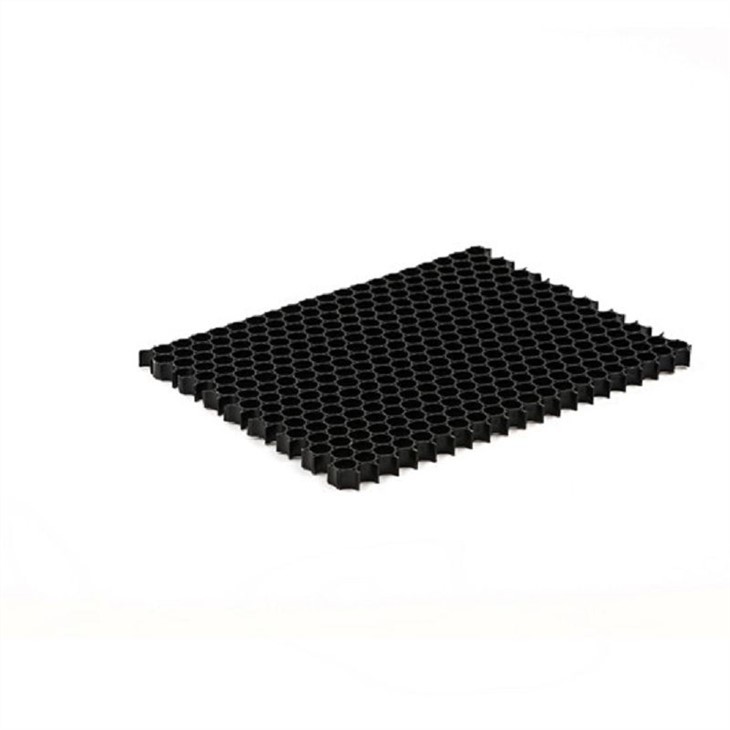
Cooling and Setting
Once the honeycomb structure is extruded, it needs to be cooled down quickly. We use a combination of air and water cooling. Air cooling is used first to start the solidification process. Then, the panels pass through a water bath to cool them down completely.
The cooling rate is critical. If it's too fast, the panels can develop internal stresses, which can lead to cracking over time. If it's too slow, the cells might deform. We've calibrated our cooling system to achieve the perfect balance. Usually, the panels are cooled to around room temperature in about 5 - 10 minutes.
Lamination
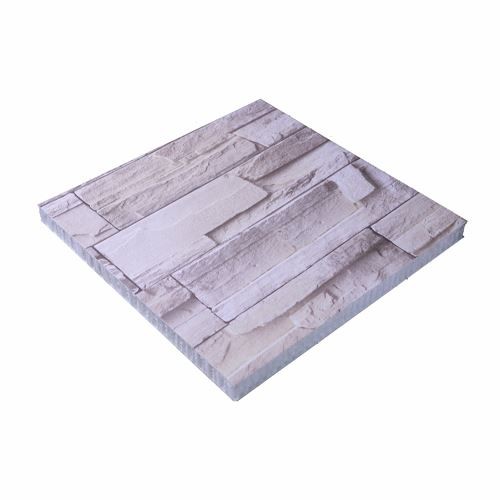
After the honeycomb core is ready, we laminate it with face sheets. The face sheets can be made of various materials like aluminum, fiberglass, or PVC. The lamination process is all about getting a strong bond between the core and the face sheets.
We use high - quality adhesives. These adhesives are chosen based on their strength, durability, and compatibility with the PET honeycomb and the face sheet material. We apply the adhesive evenly on both the core and the face sheets using a special coating machine.
Then, we use a press to apply pressure during the lamination process. The pressure ensures that the adhesive spreads evenly and creates a strong bond. The pressure and the time of pressing are adjusted according to the type of face sheet and the adhesive used. For example, when laminating with aluminum face sheets, we apply a pressure of around 5 - 10 MPa for about 10 - 15 minutes.
Quality Control
Quality control is an ongoing process throughout the production. We have a team of quality control experts who check the panels at every stage. They use various inspection methods like visual inspection, dimensional measurement, and strength testing.
Visual inspection is done to look for any surface defects like scratches, bubbles, or cracks. Dimensional measurement ensures that the panels meet the required size and thickness specifications. We use precision measuring tools like calipers and micrometers.
Strength testing is perhaps the most important. We use a universal testing machine to measure the compressive strength, shear strength, and flexural strength of the panels. If a panel fails any of these tests, it's either reworked or discarded.
Automation and Technology
We're constantly looking for ways to improve our production process using automation and new technology. We've installed automated conveyors and robotic arms in our factory. These robots can handle tasks like moving the panels between different production stages, applying adhesives, and even doing some basic quality checks.
Automation not only speeds up the production process but also reduces the chances of human error. For example, a robot can apply adhesive more evenly than a human operator, resulting in a better - bonded panel.
We also use advanced software to monitor and control the production process. The software can adjust the temperature, speed, and pressure of the machines in real - time based on the data it collects. This helps us maintain consistent quality and improve efficiency.
Waste Reduction
Reducing waste is another important aspect of optimizing the production process. We try to reuse as much of the scrap material as possible. For example, the excess PET resin from the extrusion process can be recycled and used again.
We also minimize the amount of waste generated during the lamination process. By improving the accuracy of adhesive application and cutting, we can reduce the amount of wasted face sheet material.
Training and Development
Our employees are our most valuable asset. We provide regular training to our production staff. They learn about the latest production techniques, quality control methods, and safety procedures.
We also encourage our employees to come up with suggestions for process improvement. They're the ones on the front line, so they often have great ideas. For example, one of our workers suggested a small change in the die design, which improved the cell uniformity and reduced the defect rate.
Market Trends and Adaptation
The market for PET honeycomb panels is constantly evolving. We keep a close eye on the latest market trends and customer demands. For example, there's a growing demand for more environmentally friendly panels. So, we're researching ways to use recycled PET resin in our production without sacrificing quality.
We also pay attention to new applications of PET honeycomb panels. For instance, with the development of the renewable energy industry, there's a potential for using these panels in solar panel mounting structures.
If you're interested in our Honeycomb - building - panels or Thermoplastic Honeycomb Core, or if you have any questions about our PET honeycomb panels, feel free to reach out to us for a procurement discussion. We're always happy to talk and find the best solutions for your needs.
References
- Smith, J. (2020). Advanced Manufacturing Techniques for Honeycomb Structures. Manufacturing Journal.
- Johnson, A. (2019). Quality Control in Panel Production. Production Management Review.
- Brown, K. (2021). Recycling in the Plastics Industry. Environmental Plastics Journal.