

In the dynamic realm of construction, the quest for materials that offer a blend of functionality, durability, and cost - effectiveness is never - ending. One such innovation that has been making waves is honeycomb building panels. As a supplier of Honeycomb Building Panels, I've witnessed firsthand the growing interest in these panels, especially when it comes to their sound - absorption capabilities. In this blog, we'll delve into how honeycomb building panels stack up in terms of sound absorption compared to other common building materials.
Understanding Sound Absorption
Before we start comparing honeycomb building panels, it's crucial to understand what sound absorption is. Sound absorption is the process by which a material reduces the intensity of sound waves that hit it. When sound waves strike a surface, three things can happen: they can be reflected, transmitted, or absorbed. A good sound - absorbing material will absorb a significant portion of the sound energy, converting it into heat energy.
The sound - absorption performance of a material is measured using the Noise Reduction Coefficient (NRC). The NRC is a single - number rating that ranges from 0 to 1. A material with an NRC of 0 reflects all sound, while a material with an NRC of 1 absorbs all sound.
Sound Absorption in Honeycomb Building Panels
Honeycomb building panels are engineered structures that consist of a honeycomb core sandwiched between two outer layers. The honeycomb core, often made from materials like Thermoplastic Honeycomb Core, provides a unique structure that contributes to their sound - absorption properties.
The hexagonal cells in the honeycomb core act as resonators. When sound waves enter these cells, they cause the air inside to vibrate. This vibration dissipates the sound energy as heat through friction with the walls of the cells. Additionally, the multiple layers of the panel - the core and the outer skins - create interfaces that further scatter and absorb sound waves.
The outer layers of honeycomb building panels also play a role in sound absorption. Depending on the material used for the outer skins, they can either enhance or modify the overall sound - absorption characteristics of the panel. For example, if the outer layer is made of a porous material, it can help in capturing and diffusing sound waves before they reach the honeycomb core.
Comparing with Traditional Building Materials
Gypsum Board
Gypsum board is one of the most commonly used materials in interior construction. It is known for its fire - resistance and ease of installation. However, in terms of sound absorption, gypsum board has limitations. A standard 1/2 - inch gypsum board typically has an NRC of around 0.05 - 0.20. This means that it reflects a large portion of the sound that hits it.
In contrast, honeycomb building panels can achieve much higher NRC values. With proper design and material selection, honeycomb panels can have an NRC of 0.60 or higher. This makes them far more effective at reducing noise levels in a room. For instance, in a commercial office setting where privacy and noise reduction are important, honeycomb panels can create a more peaceful and productive environment compared to gypsum board partitions.
Fiberglass Insulation
Fiberglass insulation is a popular choice for soundproofing in buildings. It works by trapping air within its fibrous structure, which helps to absorb sound waves. Fiberglass insulation can have an NRC ranging from 0.70 - 0.95, depending on its thickness and density.
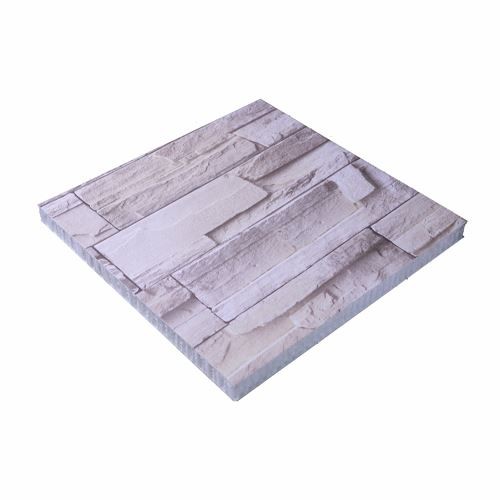
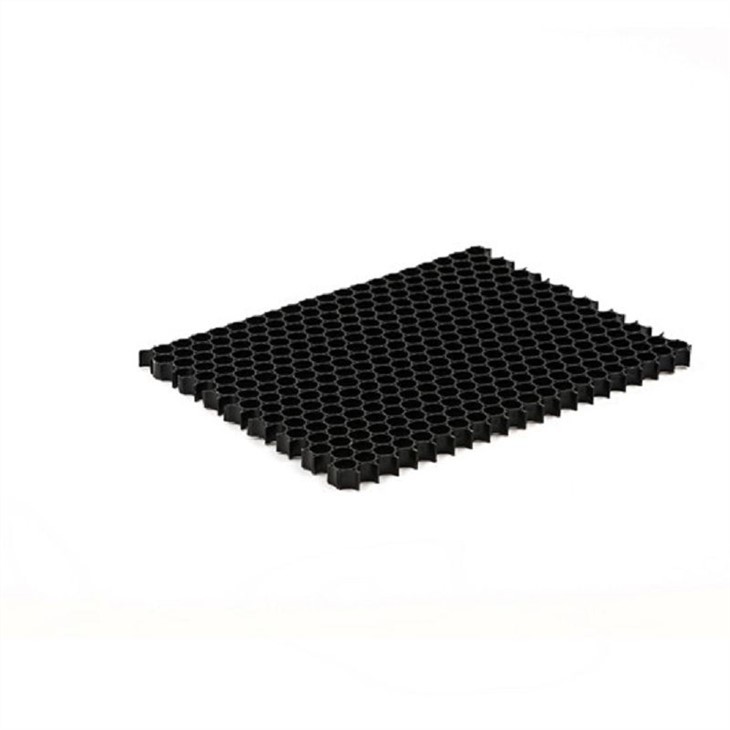
Honeycomb building panels can be designed to have comparable or even better sound - absorption performance. The advantage of honeycomb panels over fiberglass insulation is their structural integrity. Fiberglass insulation is mainly used as a filling material and requires a separate framing and covering system. Honeycomb panels, on the other hand, are self - supporting and can be used as both a structural element and a sound - absorbing material. This can simplify the construction process and reduce overall costs.
Concrete
Concrete is a widely used material in construction due to its strength and durability. However, concrete is a dense and hard material, which means it is a poor sound absorber. A typical concrete wall has an NRC of less than 0.10. It reflects most of the sound waves, causing echoes and reverberation in a space.
Honeycomb building panels offer a significant improvement in sound absorption when compared to concrete. They can be used in combination with concrete structures to enhance their acoustic performance. For example, honeycomb panels can be installed on the interior walls of a concrete building to reduce noise from the outside or between different rooms inside the building.
Factors Affecting Sound Absorption in Honeycomb Building Panels
Several factors can influence the sound - absorption capabilities of honeycomb building panels.
Core Material
The material of the honeycomb core is a critical factor. Different materials have different acoustic properties. Thermoplastic Honeycomb Core offers a good balance between structural strength and sound absorption. Other materials like paper - based honeycomb cores may have different sound - absorption characteristics. The density and stiffness of the core material also affect how it responds to sound waves.
Cell Size
The size of the hexagonal cells in the honeycomb core can impact sound absorption. Smaller cells tend to absorb higher - frequency sounds more effectively, while larger cells are better at absorbing lower - frequency sounds. By varying the cell size in a honeycomb panel, it is possible to tailor its sound - absorption performance to specific acoustic requirements.
Outer Layer Material
As mentioned earlier, the outer layer material can modify the sound - absorption properties of the panel. A porous outer layer can increase the panel's ability to capture sound waves, while a hard and smooth outer layer may reflect more sound. The thickness and density of the outer layer also play a role. For example, a thicker outer layer can provide additional mass, which can help in reducing the transmission of low - frequency sounds.
Applications of Honeycomb Building Panels for Sound Absorption
Residential Buildings
In homes, honeycomb building panels can be used in various applications. They can be installed in interior walls to reduce noise transfer between rooms, especially in multi - family dwellings. In bedrooms and home offices, honeycomb panels can create a quiet and peaceful environment. They can also be used in ceilings to reduce noise from upper floors or to improve the acoustics of a room.
Commercial Buildings
Commercial buildings such as offices, hotels, and restaurants can greatly benefit from the sound - absorption properties of honeycomb building panels. In office spaces, honeycomb panels can be used to create partition walls that minimize noise distractions and enhance privacy. In hotels, they can be used in guest rooms and corridors to provide a quiet and comfortable stay for guests. Restaurants can use honeycomb panels to control the acoustics and create a more pleasant dining atmosphere.
Industrial Buildings
Industrial settings often have high levels of noise from machinery and equipment. Honeycomb building panels can be used to line the walls and ceilings of industrial buildings to reduce noise pollution. They can also be used in control rooms and break areas to provide a quieter environment for workers.
Conclusion
Honeycomb building panels offer a compelling alternative to traditional building materials when it comes to sound absorption. Their unique structure and design allow them to achieve high levels of sound - absorption performance while also providing structural integrity. Compared to materials like gypsum board, fiberglass insulation, and concrete, honeycomb panels can significantly improve the acoustic quality of a space.
If you're in the market for high - performance building materials that can effectively reduce noise levels, I encourage you to explore our range of Honeycomb - building - panels. Whether you're a contractor, architect, or building owner, we can work with you to find the right solution for your specific needs. Contact us today to start a conversation about how our honeycomb building panels can enhance your next construction project.
References
- Beranek, Leo L. "Acoustics." American Institute of Physics, 1954.
- Craik, R. J. M. "Handbook of Cellular Polymers: Science and Technology." Springer, 2007.
- Fahy, Frank J. "Fundamentals of Noise and Vibration." Cambridge University Press, 2001.