

As a supplier of Non Woven Honeycomb Panels, I've often been asked about how bending affects the performance of these remarkable products. In this blog, I'll delve into the science behind it, exploring the key factors and sharing insights based on our industry experience.
Understanding Non Woven Honeycomb Panels
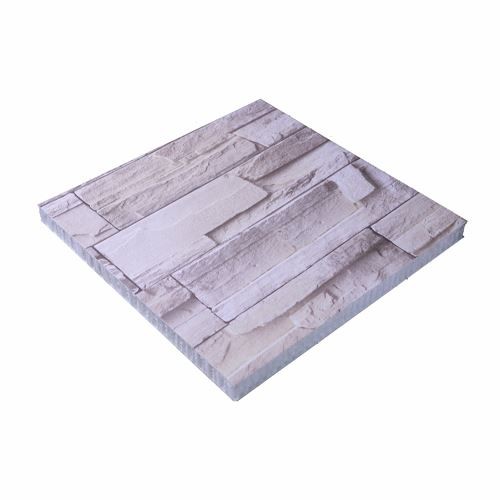
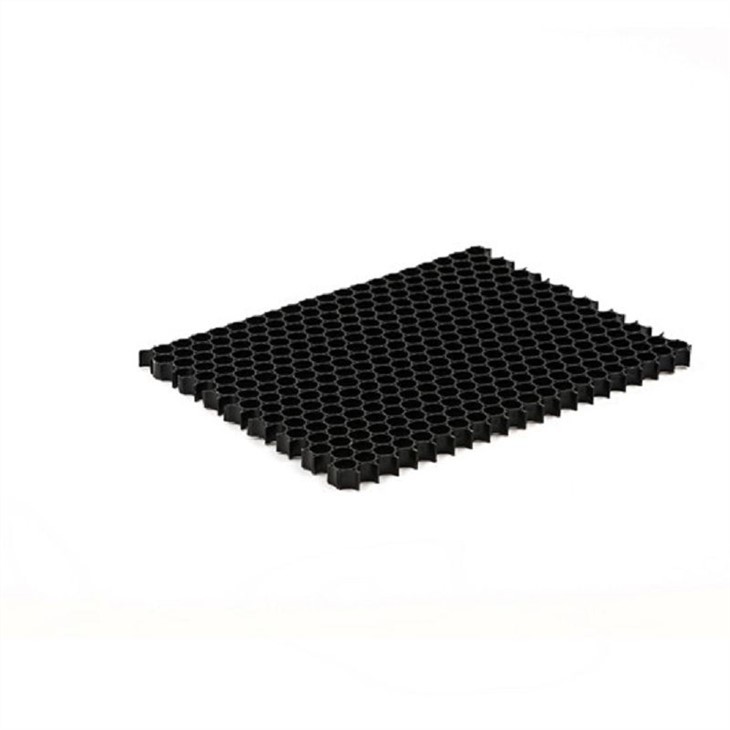
Non Woven Honeycomb Panels are a type of composite material known for their high strength - to - weight ratio. They consist of a honeycomb core, which is typically made from materials like thermoplastic or paper, and is sandwiched between two outer layers. The honeycomb structure provides excellent stiffness and support while keeping the overall weight low. These panels are widely used in various industries, from construction to automotive, due to their versatility and cost - effectiveness. You can learn more about Honeycomb - building - panels on our website.
The Basics of Bending in Non Woven Honeycomb Panels
When a Non Woven Honeycomb Panel is subjected to bending, it experiences different types of stress. There are two primary regions in the panel during bending: the tension side and the compression side. On the tension side, the outer layer is being pulled apart, while on the compression side, it is being pushed together. The honeycomb core plays a crucial role in distributing these stresses evenly across the panel.
The performance of the panel during bending depends on several factors, including the material properties of the core and outer layers, the cell size of the honeycomb, and the thickness of the panel. For instance, a panel with a smaller cell size in the honeycomb core may have better resistance to bending because the smaller cells can more effectively distribute the stress.
Material Properties and Bending Performance
The material used for the honeycomb core has a significant impact on the bending performance of the panel. Thermoplastic Honeycomb Core is a popular choice due to its excellent mechanical properties. Thermoplastics can be engineered to have specific stiffness and strength characteristics, which can be tailored to meet the requirements of different applications.
When the panel is bent, the thermoplastic core can deform elastically to a certain extent. Elastic deformation means that the panel will return to its original shape once the bending force is removed. However, if the bending force exceeds the elastic limit of the core material, plastic deformation occurs. Plastic deformation is permanent, and it can lead to a reduction in the panel's performance over time.
The outer layers of the panel also contribute to its bending performance. These layers are usually made of materials with high tensile and compressive strength, such as fiberglass or metal. They protect the honeycomb core and help to transfer the bending stresses from the outer edges of the panel to the core.
Cell Size and Thickness
The cell size of the honeycomb core is another critical factor. Smaller cell sizes generally result in better bending performance because they provide more support to the outer layers. The smaller cells can prevent the outer layers from buckling or wrinkling during bending.
Panel thickness also matters. Thicker panels tend to be more resistant to bending because they have more material to distribute the stresses. However, increasing the thickness also increases the weight of the panel, which may not be desirable in some applications where weight is a critical factor.
Impact on Panel Durability
Bending can have a long - term impact on the durability of Non Woven Honeycomb Panels. Repeated bending or excessive bending can cause micro - cracks in the honeycomb core or the outer layers. These micro - cracks can grow over time, leading to a loss of strength and stiffness in the panel.
In addition, bending can also affect the panel's ability to resist environmental factors such as moisture and chemicals. If the panel is bent to the point where the outer layers are damaged, it may be more vulnerable to moisture ingress, which can cause the honeycomb core to deteriorate.
Testing and Quality Control
As a supplier, we conduct rigorous testing to ensure that our Non Woven Honeycomb Panels meet the highest standards of performance. We use advanced testing equipment to simulate different bending conditions and measure the panel's response. This includes testing for maximum bending strength, elastic modulus, and the ability to recover from bending.
Quality control is also an essential part of our manufacturing process. We inspect each panel for defects before it leaves our facility. This helps us to identify any potential issues related to bending performance and ensure that our customers receive only the best - quality products.
Real - World Applications
In construction, Non Woven Honeycomb Panels are often used in roofing and wall systems. These panels need to be able to withstand bending due to wind loads and the weight of snow. By understanding how bending affects their performance, architects and builders can design structures that are both safe and efficient.
In the automotive industry, these panels are used for interior components and body panels. Bending performance is crucial in these applications to ensure that the panels can withstand the vibrations and impacts associated with vehicle operation.
Conclusion
In conclusion, bending does affect the performance of Non Woven Honeycomb Panels. The material properties, cell size, and thickness of the panel all play important roles in determining how the panel will respond to bending. As a supplier, we are committed to providing our customers with high - quality panels that can withstand the bending forces they will encounter in their specific applications.
If you are interested in learning more about our Non Woven Honeycomb Panels or have questions about their bending performance, please feel free to contact us. We are more than happy to discuss your requirements and provide you with the best solutions for your projects.
References
- Jones, R. M. (2019). Mechanics of Composite Materials. CRC Press.
- Gibson, L. J., & Ashby, M. F. (1997). Cellular Solids: Structure and Properties. Cambridge University Press.