

As a supplier of PP Honeycomb Core, I often encounter inquiries regarding its mechanical properties, with the Young's modulus being a frequently asked question. The Young's modulus, also known as the modulus of elasticity, is a fundamental material property that measures the stiffness of a solid material. It is defined as the ratio of the stress (force per unit area) to the strain (relative deformation) in the elastic region of a material's stress-strain curve.
Understanding the Young's Modulus of PP Honeycomb Core
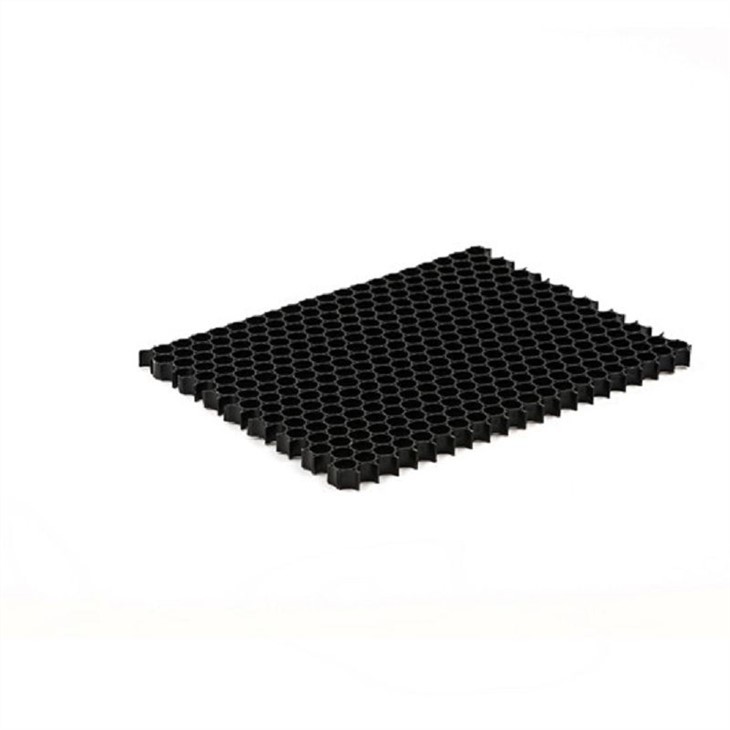
PP, or polypropylene, is a thermoplastic polymer that is widely used in various industries due to its excellent chemical resistance, low density, and good mechanical properties. The honeycomb core structure, on the other hand, is a lightweight and strong design that mimics the natural structure of a beehive. When combined, PP and the honeycomb core design result in a material that offers a unique combination of strength, stiffness, and lightweight properties.
The Young's modulus of PP Honeycomb Core can vary depending on several factors, including the density of the core, the cell size of the honeycomb structure, and the manufacturing process. Generally, the Young's modulus of PP Honeycomb Core ranges from 100 MPa to 500 MPa. This relatively low Young's modulus compared to other engineering materials such as metals and ceramics is due to the lightweight nature of the honeycomb structure and the inherent flexibility of polypropylene.
Factors Affecting the Young's Modulus of PP Honeycomb Core
Density of the Core
The density of the PP Honeycomb Core is one of the primary factors that influence its Young's modulus. As the density of the core increases, the number of cell walls per unit volume also increases, resulting in a stiffer material. This is because the cell walls provide additional support and resistance to deformation. Therefore, higher density PP Honeycomb Cores typically have a higher Young's modulus.
Cell Size of the Honeycomb Structure
The cell size of the honeycomb structure also plays a significant role in determining the Young's modulus of PP Honeycomb Core. Smaller cell sizes generally result in a higher Young's modulus because the smaller cells provide more support and resistance to deformation. Additionally, smaller cell sizes can also improve the material's strength and stiffness by reducing the distance between the cell walls.
Manufacturing Process
The manufacturing process used to produce the PP Honeycomb Core can also affect its Young's modulus. Different manufacturing processes can result in variations in the density, cell size, and orientation of the cell walls, which can all impact the material's mechanical properties. For example, extrusion molding is a common manufacturing process for PP Honeycomb Core, and the extrusion conditions such as temperature, pressure, and speed can influence the final properties of the material.
Applications of PP Honeycomb Core Based on Its Young's Modulus
The unique combination of strength, stiffness, and lightweight properties of PP Honeycomb Core makes it suitable for a wide range of applications. Some of the common applications of PP Honeycomb Core based on its Young's modulus include:
Construction Industry
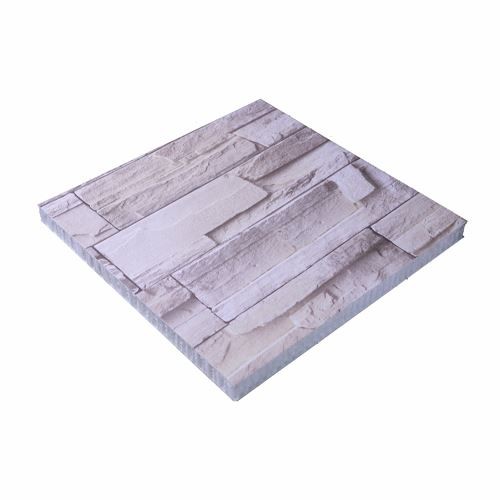
In the construction industry, PP Honeycomb Core is used in the production of Honeycomb-building-panels. These panels are lightweight, yet strong enough to support significant loads, making them ideal for use in partitions, ceilings, and wall claddings. The relatively low Young's modulus of PP Honeycomb Core allows the panels to absorb and distribute stress evenly, reducing the risk of cracking or failure.
Transportation Industry
The transportation industry also benefits from the use of PP Honeycomb Core. It is used in the manufacturing of interior components such as seat backs, door panels, and luggage compartments. The lightweight nature of the material helps to reduce the overall weight of the vehicle, improving fuel efficiency and performance. At the same time, the Young's modulus of the PP Honeycomb Core ensures that the components can withstand the stresses and vibrations experienced during transportation.
Packaging Industry
PP Honeycomb Core is also widely used in the packaging industry. It provides excellent cushioning and protection for fragile items during shipping and handling. The material's ability to absorb and dissipate energy, combined with its relatively low Young's modulus, makes it an ideal choice for packaging applications where shock absorption is crucial.
Importance of Knowing the Young's Modulus for Suppliers and Customers
For suppliers like me, understanding the Young's modulus of PP Honeycomb Core is essential for quality control and product development. By accurately measuring and controlling the Young's modulus, we can ensure that our products meet the specific requirements of our customers. This includes providing products with the appropriate stiffness and strength for different applications.
For customers, knowing the Young's modulus of PP Honeycomb Core is crucial for selecting the right material for their projects. Different applications require different levels of stiffness and strength, and the Young's modulus provides a reliable indicator of these properties. By considering the Young's modulus, customers can make informed decisions about which type of PP Honeycomb Core is best suited for their needs.
Conclusion
In conclusion, the Young's modulus of PP Honeycomb Core is a critical material property that determines its stiffness and strength. It is influenced by factors such as the density of the core, the cell size of the honeycomb structure, and the manufacturing process. Understanding the Young's modulus of PP Honeycomb Core is essential for both suppliers and customers, as it allows for better quality control, product development, and material selection.
If you are interested in purchasing PP Honeycomb Core for your project, we would be more than happy to assist you. Our team of experts can provide you with detailed information about the Young's modulus and other mechanical properties of our products, as well as help you select the right material for your specific needs. Contact us today to start a discussion about your procurement requirements.
References
- Callister, W. D., & Rethwisch, D. G. (2011). Materials Science and Engineering: An Introduction. Wiley.
- Ashby, M. F., & Jones, D. R. H. (2005). Engineering Materials 1: An Introduction to Properties, Applications, and Design. Butterworth-Heinemann.