

Hey there! As a supplier of Non Woven Honeycomb Panels, I know how crucial it is to ensure the quality of these panels. In this blog, I'll share some practical ways to test the quality of Non Woven Honeycomb Panels.
1. Visual Inspection
The first step in testing the quality of Non Woven Honeycomb Panels is a simple visual inspection. You don't need any fancy equipment for this one. Just take a good look at the panel.
Check for any visible defects like holes, tears, or uneven surfaces. A high - quality panel should have a smooth and consistent appearance. If you notice any bumps or depressions, it could be a sign of a manufacturing issue. Also, look at the edges of the panel. They should be cleanly cut without any fraying.
Another thing to look for is the color consistency. If the panel is supposed to be a certain color, make sure that color is uniform across the entire surface. Any color variations might indicate problems with the raw materials or the manufacturing process.
2. Thickness and Density Testing
The thickness and density of a Non Woven Honeycomb Panel are important factors that can affect its performance. You can use a caliper to measure the thickness of the panel at different points. A good quality panel should have a consistent thickness within an acceptable tolerance range.
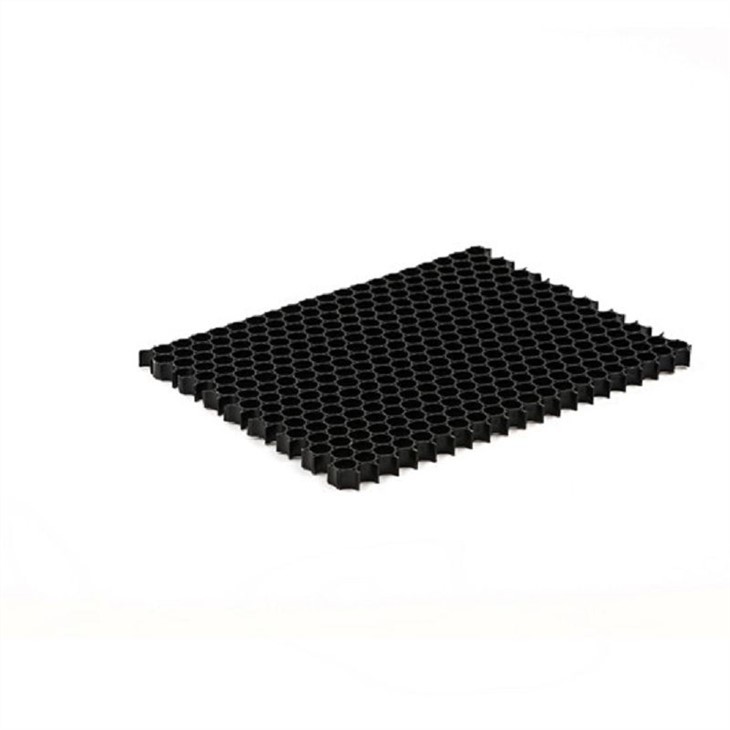
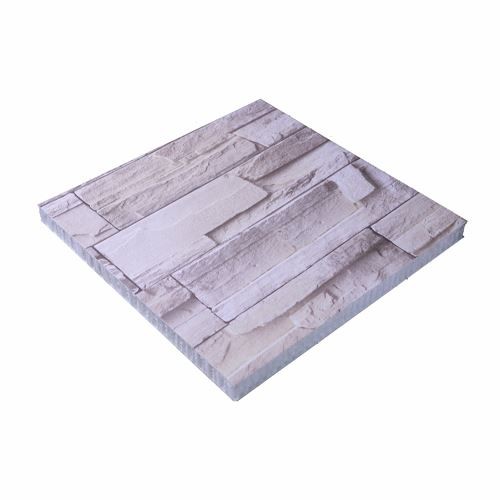
For density testing, you'll need to calculate the mass of a known volume of the panel. First, cut a sample of the panel with a known size. Then, weigh the sample using a scale. Divide the mass by the volume of the sample to get the density. Compare this density with the specifications provided by the manufacturer. If the density is too low, the panel might be weak and not suitable for heavy - duty applications. On the other hand, if it's too high, it could make the panel heavier than necessary and increase costs.
3. Tensile Strength Testing
Tensile strength is a measure of how much pulling force a panel can withstand before it breaks. To test the tensile strength of a Non Woven Honeycomb Panel, you'll need a tensile testing machine.
Cut a strip of the panel with a specific width and length according to the testing standards. Attach the strip to the tensile testing machine and gradually apply a pulling force until the panel breaks. The machine will record the maximum force the panel can withstand. A higher tensile strength indicates a stronger panel, which is especially important for applications where the panel will be subjected to pulling or stretching forces.
4. Compression Strength Testing
Compression strength is another important property to test. This measures how much pressure a panel can handle when it's being squeezed. You can use a compression testing machine for this.
Place a sample of the panel between the two plates of the compression testing machine. Slowly apply pressure until the panel starts to deform or collapse. The machine will measure the maximum pressure the panel can withstand. A panel with good compression strength is suitable for applications where it will be under heavy loads, such as in construction or industrial settings.
5. Fire Resistance Testing
In many applications, fire resistance is a critical factor. There are different methods to test the fire resistance of Non Woven Honeycomb Panels.
One common test is the flammability test. You can expose a small sample of the panel to a flame for a specific period of time and observe how it reacts. A good quality panel should have a low flammability rating, meaning it doesn't catch fire easily and doesn't spread flames quickly. Some panels are also treated with fire - retardant chemicals, and you can test if these treatments are effective through more advanced fire resistance tests.
6. Chemical Resistance Testing
If the Non Woven Honeycomb Panel will be used in an environment where it might come into contact with chemicals, it's important to test its chemical resistance.
You can soak a sample of the panel in different chemicals for a certain period of time and then observe any changes in its appearance, strength, or other properties. For example, if the panel is going to be used in a chemical plant, it should be able to resist the chemicals commonly found in that environment without deteriorating.
7. Moisture Resistance Testing
Moisture can cause damage to Non Woven Honeycomb Panels over time. To test the moisture resistance, you can place a sample of the panel in a high - humidity environment or soak it in water for a specific period.
After the exposure, check for any signs of swelling, warping, or loss of strength. A panel with good moisture resistance will maintain its integrity even when exposed to moisture, which is important for applications in damp or wet environments.
8. Sound and Thermal Insulation Testing
For some applications, such as in buildings or vehicles, sound and thermal insulation properties are important.
To test the sound insulation, you can use a soundproof chamber and measure the amount of sound that passes through the panel. A good panel will reduce the amount of sound transmission effectively.
For thermal insulation testing, you can use a heat flow meter to measure the amount of heat that passes through the panel. A panel with high thermal insulation properties will prevent heat transfer, which can help in energy - efficient buildings.
Why Quality Testing Matters
As a supplier, I understand that quality testing is not just about meeting standards. It's about providing our customers with products that they can rely on. High - quality Non Woven Honeycomb Panels offer better performance, longer lifespan, and greater safety.
Whether you're using these panels in Thermoplastic Honeycomb Core applications or Honeycomb - building - panels, you need to be sure that they can handle the demands of the job.
If you're in the market for Non Woven Honeycomb Panels and want to ensure you're getting the best quality, don't hesitate to reach out. We're here to answer your questions and provide you with top - notch products. Contact us for more information and let's start a great business relationship.
References
- ASTM International. Standard test methods for various properties of composite materials.
- ISO standards related to panel testing and quality control.
- Industry research reports on Non Woven Honeycomb Panels.