

Hey there! As a supplier of PP Honeycomb Core, I often get asked whether this nifty material can find its way into the cement industry. Well, let's dive right in and explore the possibilities.
First off, what exactly is PP Honeycomb Core? It's a lightweight yet incredibly strong material made from polypropylene. The honeycomb structure gives it excellent stiffness - to - weight ratio. You can check out Honeycomb - building - panels to get a better idea of how it's used in building applications.
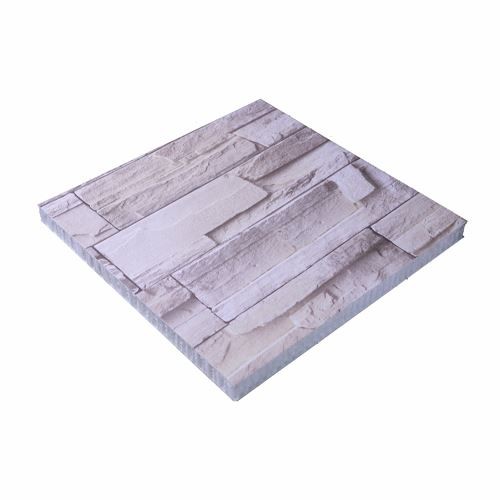
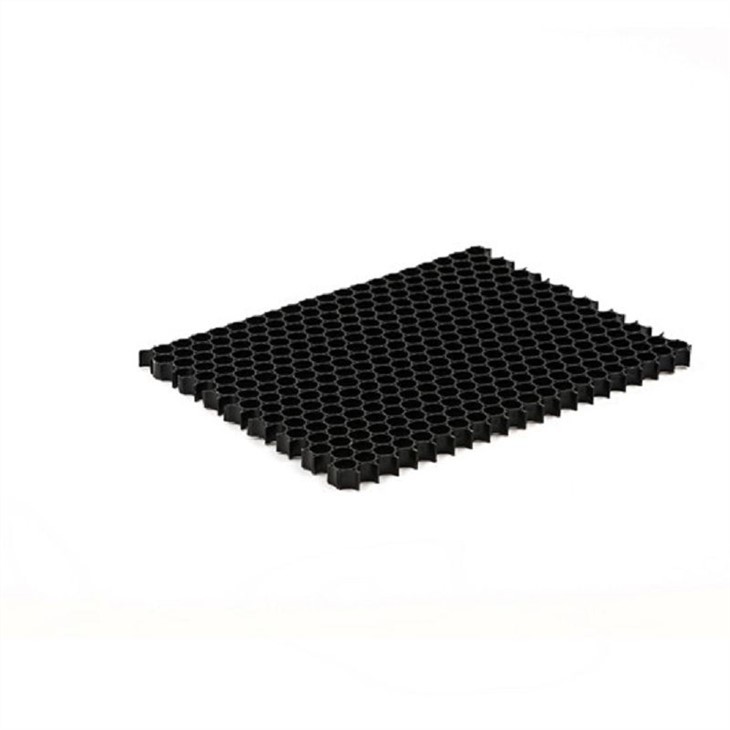
When we think about the cement industry, we're talking about a sector that's all about durability, strength, and cost - effectiveness. Cement is used in everything from building foundations to roads and bridges. So, can PP Honeycomb Core fit into this picture?
One of the key advantages of PP Honeycomb Core is its light weight. In the cement industry, transporting heavy materials can be a real pain in the neck. If we can use PP Honeycomb Core in some applications, it could significantly reduce the overall weight of the cement - based products. For example, in pre - cast concrete elements, adding a layer of PP Honeycomb Core in the middle could cut down on the amount of concrete needed without sacrificing too much strength. This not only saves on material costs but also makes transportation and installation a whole lot easier.
Another aspect is insulation. Cement structures often need good insulation properties to keep buildings warm in winter and cool in summer. PP Honeycomb Core, especially Thermoplastic Honeycomb Core, has decent thermal insulation capabilities. By integrating it into cement panels or blocks, we can create a more energy - efficient building material. This is becoming increasingly important as energy costs rise and environmental concerns grow.
But it's not all sunshine and rainbows. There are some challenges we need to address when considering using PP Honeycomb Core in the cement industry. One of the main issues is the compatibility between PP Honeycomb Core and cement. Cement is highly alkaline, and we need to make sure that the polypropylene material in the honeycomb core won't degrade over time due to the chemical environment. Some surface treatments or coatings might be required to protect the PP Honeycomb Core from the harsh cement environment.
Also, the bonding between PP Honeycomb Core and cement is crucial. If the two materials don't bond well, the overall strength and performance of the composite structure will be compromised. We need to develop proper bonding techniques, perhaps using special adhesives or mechanical interlocking methods, to ensure a strong and durable connection.
In terms of fire resistance, cement is known for its excellent fire - proof properties. PP Honeycomb Core, on the other hand, is a plastic material and is more flammable. However, with the use of fire - retardant additives, we can improve the fire resistance of the PP Honeycomb Core to an acceptable level for many cement industry applications.
Let's look at some potential applications in more detail. In the production of lightweight cement boards, PP Honeycomb Core could be used as a core layer. These boards can be used for interior partitions, wall linings, and even in some non - load - bearing exterior applications. The lightweight nature of the boards makes them easy to handle, and the insulation properties can enhance the comfort of the building.
For pre - fabricated concrete modules, such as those used in modular construction, PP Honeycomb Core can play a role in reducing the weight and improving the overall performance. These modules can be quickly assembled on - site, and the use of PP Honeycomb Core can speed up the construction process while keeping costs down.
In the area of road construction, we could potentially use cement - PP Honeycomb Core composites for noise - reducing barriers. The honeycomb structure can help absorb sound waves, and the cement provides the necessary strength and durability.
Now, I know I've been throwing around a lot of ideas, and you might be wondering if all this is just theoretical or if there's any real - world evidence. Well, there have been some pilot projects and research studies that show promising results. Some construction companies have started to experiment with using PP Honeycomb Core in small - scale cement applications, and the initial feedback has been positive.
Of course, more research and development are needed to fully realize the potential of using PP Honeycomb Core in the cement industry. But I'm confident that with the right approach, we can overcome the challenges and make this a viable option.
If you're in the cement industry and are interested in exploring the use of PP Honeycomb Core in your projects, I'd love to have a chat with you. Whether you have questions about the material, want to discuss potential applications, or are ready to start a procurement process, don't hesitate to reach out. We can work together to find the best solutions for your specific needs.
In conclusion, while there are challenges to using PP Honeycomb Core in the cement industry, the potential benefits in terms of weight reduction, insulation, and cost - savings are significant. With further research and development, we can make this a reality. So, if you're looking for innovative and sustainable solutions in the cement industry, give PP Honeycomb Core a thought.
References
- Industry reports on lightweight construction materials
- Research papers on polymer - cement composites
- Case studies of pilot projects using PP Honeycomb Core in construction