

Hey there! As a supplier of PP Honeycomb Panels, I often get asked about the sound - absorption coefficient of these panels. So, I thought I'd sit down and write this blog to give you all the low - down on what that coefficient is and why it matters.
First off, let's break down what the sound - absorption coefficient actually is. In simple terms, it's a number that tells you how well a material can absorb sound. The coefficient ranges from 0 to 1. A coefficient of 0 means the material reflects all the sound that hits it, like a mirror reflects light. On the other hand, a coefficient of 1 means the material absorbs all the sound, and there's no reflection at all.
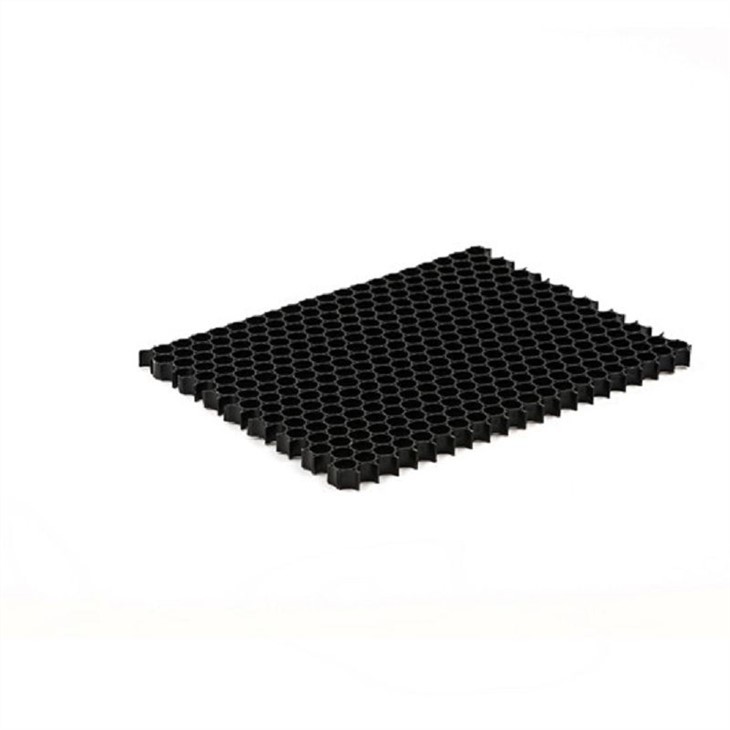
Now, let's talk about our PP Honeycomb Panels. PP, or polypropylene, is a thermoplastic polymer. These honeycomb panels are made up of a series of hexagonal cells, which gives them their unique structure. This structure plays a huge role in how they interact with sound.
When sound waves hit a PP Honeycomb Panel, they enter the hexagonal cells. Inside these cells, the sound waves bounce around. As they bounce, the energy of the sound waves gets converted into heat energy. This conversion is what causes the sound to be absorbed. The more efficiently the sound energy is converted into heat, the higher the sound - absorption coefficient of the panel.
The sound - absorption coefficient of our PP Honeycomb Panels can vary depending on a few factors. One of the main factors is the thickness of the panel. Generally, thicker panels tend to have a higher sound - absorption coefficient. This is because the sound waves have more space to travel and bounce around inside the cells, allowing for more energy conversion.
Another factor is the density of the honeycomb structure. A denser structure means there are more cell walls for the sound waves to interact with. This increased interaction can lead to more efficient sound absorption. However, finding the right balance is key. If the density is too high, it can also make the panel heavier and more expensive.
The frequency of the sound also affects the absorption coefficient. Different frequencies of sound interact with the panel in different ways. Our PP Honeycomb Panels are designed to have a good absorption coefficient across a wide range of frequencies. But, they may perform better at certain frequencies than others. For example, they might be more effective at absorbing mid - frequency sounds compared to very high or very low frequencies.
So, why is the sound - absorption coefficient of our PP Honeycomb Panels important? Well, there are many applications where sound absorption is crucial. One of the most common applications is in the construction industry. In buildings, especially in places like offices, schools, and hospitals, controlling noise is essential. Our panels can be used in walls, ceilings, and partitions to reduce the amount of noise that travels between rooms. You can check out more about our Honeycomb - building - panels for these types of applications.
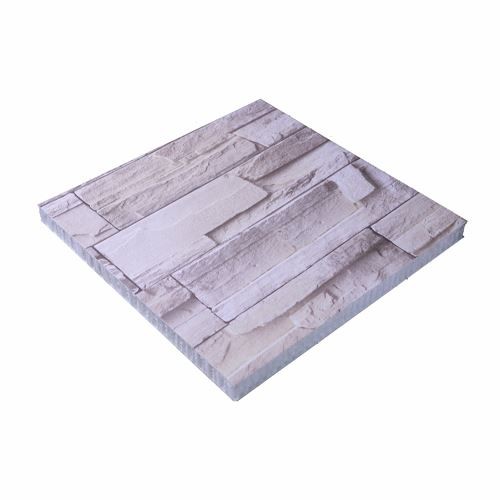
In the automotive industry, sound absorption is also a big deal. Cars can be noisy places, especially when the engine is running or when driving on rough roads. Our PP Honeycomb Panels can be used in the interior of cars to reduce the amount of noise that reaches the passengers. This can make for a more comfortable driving experience.
Another application is in the aerospace industry. Planes need to be as quiet as possible for the comfort of the passengers and the crew. Our panels can be used in the interior of planes to absorb sound and reduce noise levels.
Our Thermoplastic Honeycomb Core is also used in many other industries where sound absorption is important. For example, in the marine industry, boats can be noisy due to the engine and the waves. Our panels can be used to reduce the noise inside the boat.
Now, you might be wondering how we measure the sound - absorption coefficient of our panels. We use a standard test method called the reverberation room method. In this method, the panel is placed in a special room called a reverberation room. Sound is then generated in the room, and the decay of the sound is measured. By comparing the decay of the sound with and without the panel, we can calculate the sound - absorption coefficient.
We also conduct a lot of research and development to improve the sound - absorption performance of our panels. We're constantly experimenting with different thicknesses, densities, and cell sizes to find the optimal combination for maximum sound absorption.
If you're in the market for high - quality PP Honeycomb Panels with good sound - absorption properties, you've come to the right place. We're a reliable supplier, and we can provide you with panels that meet your specific needs. Whether you're working on a small project or a large - scale construction, we can offer you the right solution.
If you have any questions about our PP Honeycomb Panels, their sound - absorption coefficient, or how they can be used in your project, don't hesitate to reach out. We're here to help you make the best choice for your sound - absorption needs. Let's start a conversation and see how we can work together to achieve your goals.
References:
- Acoustics Handbook for Architects and Engineers
- Research Papers on Thermoplastic Honeycomb Structures and Sound Absorption