

As a seasoned supplier of PET honeycomb panels, I often encounter questions from clients about the technical specifications of our products. One of the most frequently asked questions is about the modulus of elasticity of a PET honeycomb panel. In this blog post, I will delve into what the modulus of elasticity is, why it matters for PET honeycomb panels, and how it impacts the performance of these versatile materials.
Understanding the Modulus of Elasticity
The modulus of elasticity, also known as Young's modulus, is a fundamental mechanical property that measures the stiffness of a material. It quantifies the relationship between stress (the force applied per unit area) and strain (the resulting deformation) within the elastic range of a material. In simpler terms, it tells us how much a material will stretch or compress when a force is applied to it.
Mathematically, the modulus of elasticity (E) is defined as the ratio of stress (σ) to strain (ε):
[E = \frac{\sigma}{\varepsilon}]
where stress (σ) is measured in pascals (Pa) or pounds per square inch (psi), and strain (ε) is a dimensionless quantity representing the fractional change in length.
Materials with a high modulus of elasticity are stiffer and less likely to deform under load, while materials with a low modulus of elasticity are more flexible and can undergo greater deformation. For example, steel has a high modulus of elasticity, which makes it suitable for structural applications where stiffness is crucial. On the other hand, rubber has a low modulus of elasticity, allowing it to stretch and bend easily.
Importance of the Modulus of Elasticity for PET Honeycomb Panels
PET honeycomb panels are widely used in various industries, including aerospace, automotive, construction, and packaging, due to their lightweight, high strength, and excellent energy absorption properties. The modulus of elasticity plays a critical role in determining the performance of these panels in different applications.
Structural Integrity
In structural applications, such as building facades and aircraft interiors, the modulus of elasticity of a PET honeycomb panel is essential for maintaining its shape and resisting deformation under load. A high modulus of elasticity ensures that the panel can withstand external forces without significant bending or warping, providing long-term structural stability.
Load-Bearing Capacity
The ability of a PET honeycomb panel to support heavy loads is directly related to its modulus of elasticity. Panels with a higher modulus can distribute the load more effectively, reducing the risk of failure and ensuring the safety of the structure. This is particularly important in applications where the panel is subjected to dynamic loads, such as in automotive and aerospace components.
Energy Absorption
PET honeycomb panels are known for their excellent energy absorption capabilities, which make them ideal for use in impact-resistant applications. The modulus of elasticity affects how the panel responds to impact forces. A panel with an appropriate modulus can deform in a controlled manner, absorbing and dissipating energy to protect the underlying structure or contents.
Factors Affecting the Modulus of Elasticity of PET Honeycomb Panels
The modulus of elasticity of a PET honeycomb panel is influenced by several factors, including the material properties of the PET resin, the geometry of the honeycomb structure, and the manufacturing process.
Material Properties of PET Resin
The type and quality of the PET resin used in the honeycomb panel can significantly affect its modulus of elasticity. Different grades of PET resin have varying molecular structures and crystallinity levels, which can impact the stiffness and mechanical properties of the material. Generally, PET resins with higher crystallinity have a higher modulus of elasticity.
Geometry of the Honeycomb Structure
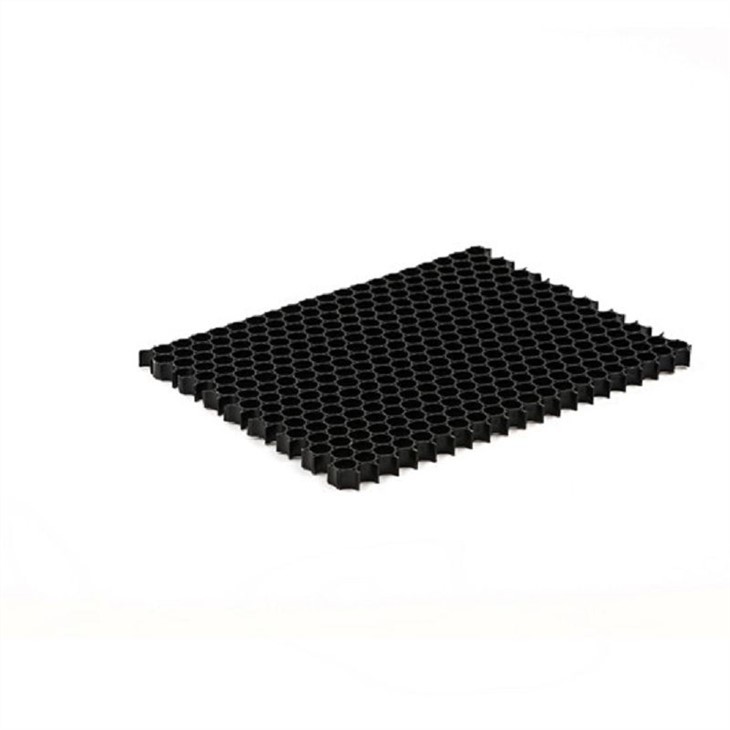
The size, shape, and density of the honeycomb cells also play a crucial role in determining the modulus of elasticity of the panel. Honeycomb structures with smaller cell sizes and higher cell densities tend to have a higher modulus of elasticity because they provide more support and resistance to deformation. Additionally, the orientation of the honeycomb cells can affect the anisotropic properties of the panel, with the modulus of elasticity being higher in the direction parallel to the cell walls.
Manufacturing Process
The manufacturing process used to produce the PET honeycomb panel can influence its modulus of elasticity. Factors such as the extrusion temperature, cooling rate, and post-processing treatments can affect the crystallization and orientation of the PET molecules, which in turn impact the mechanical properties of the panel. For example, a slower cooling rate during extrusion can promote higher crystallinity and a higher modulus of elasticity.
Measuring the Modulus of Elasticity of PET Honeycomb Panels
There are several methods available for measuring the modulus of elasticity of PET honeycomb panels, including tensile testing, compression testing, and flexural testing.
Tensile Testing
Tensile testing involves applying a pulling force to a specimen of the PET honeycomb panel until it breaks. The stress and strain data collected during the test are used to calculate the modulus of elasticity. This method is suitable for determining the modulus of elasticity in the longitudinal direction of the panel.
Compression Testing
Compression testing is similar to tensile testing, but instead of applying a pulling force, a compressive force is applied to the specimen. This method is useful for measuring the modulus of elasticity in the transverse direction of the panel and for evaluating the panel's ability to withstand compressive loads.
Flexural Testing
Flexural testing, also known as bending testing, involves applying a load to the center of a simply supported beam of the PET honeycomb panel. The deflection of the beam under the load is measured, and the modulus of elasticity is calculated based on the beam theory. This method is commonly used to evaluate the stiffness and strength of the panel in bending applications.
Applications of PET Honeycomb Panels Based on Modulus of Elasticity
The modulus of elasticity of a PET honeycomb panel determines its suitability for different applications. Here are some examples of how the modulus of elasticity influences the use of PET honeycomb panels in various industries:
Aerospace Industry
In the aerospace industry, PET honeycomb panels with a high modulus of elasticity are used in aircraft interiors, such as cabin partitions, overhead bins, and galley components. These panels need to be lightweight yet strong enough to withstand the rigors of flight and provide structural support. The high modulus of elasticity ensures that the panels can maintain their shape and integrity under the dynamic loads experienced during takeoff, landing, and flight.
Automotive Industry
In the automotive industry, PET honeycomb panels are used in applications such as door panels, seat backs, and trunk liners. Panels with a moderate modulus of elasticity are preferred in these applications because they offer a good balance between stiffness and flexibility. The panels need to be able to absorb impact energy in the event of a collision while also providing sufficient support and comfort for the passengers.
Construction Industry
In the construction industry, PET honeycomb panels are used in building facades, partitions, and roofing systems. Panels with a high modulus of elasticity are suitable for applications where structural stability and load-bearing capacity are important, such as in large-span structures. The panels can be used to create lightweight yet strong building elements that reduce the overall weight of the structure and improve energy efficiency.
Packaging Industry
In the packaging industry, PET honeycomb panels are used for protective packaging of fragile items. Panels with a low modulus of elasticity are often preferred in this application because they can conform to the shape of the item being packaged and provide cushioning and shock absorption. The panels can be easily cut and shaped to fit the specific requirements of the package.
Conclusion
The modulus of elasticity is a crucial property that determines the performance and suitability of PET honeycomb panels for different applications. As a supplier of PET honeycomb panels, we understand the importance of providing panels with the right modulus of elasticity to meet the specific needs of our customers. Our panels are carefully engineered and manufactured to ensure consistent and reliable mechanical properties, including a high modulus of elasticity when required.
If you are interested in learning more about our PET honeycomb panels or have specific requirements for your application, please [contact us](insert appropriate contact method here). Our team of experts is ready to assist you in selecting the right panel for your project and providing you with the technical support you need. We look forward to the opportunity to work with you and help you achieve your goals.
References
- Callister, W. D., & Rethwisch, D. G. (2014). Materials Science and Engineering: An Introduction. Wiley.
- Ashby, M. F., & Jones, D. R. H. (2012). Engineering Materials 1: An Introduction to Properties, Applications, and Design. Butterworth-Heinemann.
- Gibson, L. J., & Ashby, M. F. (1997). Cellular Solids: Structure and Properties. Cambridge University Press.