

Creep resistance is a critical property when evaluating the performance and durability of materials, especially in applications where long - term load - bearing is required. As a supplier of PET honeycomb panels, understanding and communicating the creep resistance of these panels is essential for our customers. In this blog, we will explore what creep resistance is, why it matters for PET honeycomb panels, and how our products fare in this aspect.
What is Creep?
Creep is the slow and progressive deformation of a material under a constant load over time. When a material is subjected to a stress, it initially deforms elastically, meaning it will return to its original shape once the stress is removed. However, if the stress is maintained for an extended period, the material may start to deform plastically, and this plastic deformation accumulates over time, which is known as creep.
Creep is influenced by several factors, including temperature, stress level, and the material's composition and microstructure. Higher temperatures generally accelerate the creep process because they provide more energy for the atoms or molecules in the material to move and rearrange. Similarly, higher stress levels also increase the rate of creep.
Why Creep Resistance Matters for PET Honeycomb Panels
PET (Polyethylene Terephthalate) honeycomb panels are widely used in various industries, such as aerospace, automotive, construction, and packaging. In these applications, the panels often need to support loads for long periods. For example, in the construction industry, PET honeycomb panels can be used as building partitions or wall claddings. They need to maintain their shape and structural integrity over years of use, even under the influence of gravity and environmental factors.
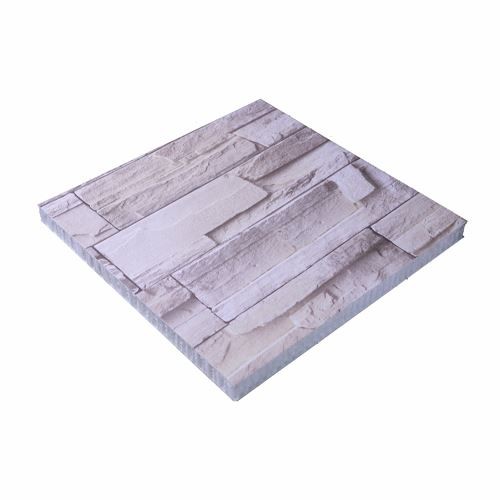
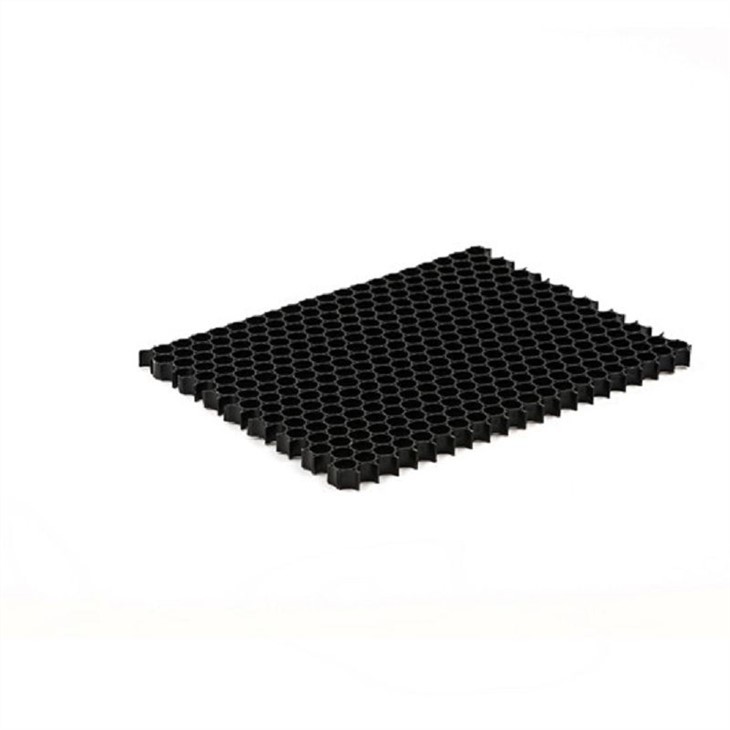
In the aerospace and automotive industries, weight reduction is crucial for fuel efficiency. PET honeycomb panels offer a high strength - to - weight ratio, making them an ideal choice. However, they also need to withstand the mechanical stresses during operation. If the panels have poor creep resistance, they may deform over time, which can lead to structural failures, reduced performance, and safety risks.
Creep Resistance of PET Honeycomb Panels
The creep resistance of PET honeycomb panels is mainly determined by the properties of the PET material and the unique honeycomb structure.
PET Material Properties
PET is a semi - crystalline thermoplastic polymer. Its semi - crystalline nature gives it relatively good mechanical properties, including a certain degree of creep resistance. The crystalline regions in PET act as physical cross - links, which restrict the movement of polymer chains and thus slow down the creep process.
However, the creep behavior of PET is also affected by temperature. At higher temperatures, the mobility of polymer chains increases, and the crystalline regions may start to melt or become more flexible. As a result, the creep rate of PET honeycomb panels will increase. Our company has developed special PET formulations to enhance the creep resistance of our honeycomb panels, especially for applications in high - temperature environments.
Honeycomb Structure
The honeycomb structure of our panels plays a significant role in improving creep resistance. The hexagonal cells in the honeycomb distribute the load evenly across the panel. This even load distribution reduces the stress concentration at any single point, which helps to minimize the creep deformation.
Moreover, the honeycomb structure provides a high degree of stiffness with a relatively low weight. The walls of the honeycomb cells act as columns, which can resist the compressive forces and prevent the panel from collapsing under load. This structural design significantly enhances the long - term load - bearing capacity of our PET honeycomb panels.
Testing and Evaluation of Creep Resistance
To ensure the quality and performance of our PET honeycomb panels, we conduct rigorous creep tests. These tests typically involve applying a constant load to the panels at a specific temperature and measuring the deformation over time.
We use industry - standard testing methods, such as ASTM D2990, which provides guidelines for determining the creep and creep - rupture properties of plastics. By conducting these tests under different conditions, we can accurately assess the creep behavior of our panels and provide our customers with reliable data on their long - term performance.
Comparison with Other Materials
Compared with traditional materials such as wood, metal, and some other plastics, PET honeycomb panels offer unique advantages in terms of creep resistance.
Wood
Wood is a natural material that is widely used in construction. However, it is susceptible to moisture and biological degradation, which can significantly affect its creep resistance. In addition, the anisotropic nature of wood means that its mechanical properties vary depending on the grain direction, making it more difficult to predict and control the creep behavior. In contrast, our PET honeycomb panels have more consistent properties and are not affected by moisture or biological factors, providing more reliable long - term performance.
Metal
Metals generally have high strength, but they are also heavy. In applications where weight is a concern, such as aerospace and automotive, the high weight of metals can be a drawback. Moreover, some metals may be prone to corrosion, which can reduce their creep resistance over time. Our PET honeycomb panels offer a lightweight alternative with comparable or even better creep resistance in certain applications.
Other Plastics
There are many types of plastics available in the market, but not all of them have good creep resistance. Some plastics may deform easily under long - term load, especially at elevated temperatures. Our PET honeycomb panels, with their optimized PET formulation and honeycomb structure, outperform many other plastics in terms of creep resistance.
Applications and Benefits of High Creep Resistance
The high creep resistance of our PET honeycomb panels opens up a wide range of applications.
Construction
In the construction industry, our panels can be used for Honeycomb - building - panels. They can be used as interior partitions, exterior wall claddings, and roofing materials. The high creep resistance ensures that the panels maintain their shape and flatness over time, providing a stable and aesthetically pleasing building structure.
Aerospace and Automotive
In the aerospace and automotive industries, our Thermoplastic Honeycomb Core can be used for interior components, such as seat backs, door panels, and luggage compartments. The lightweight and high creep resistance of our panels help to reduce the overall weight of the vehicle or aircraft, improving fuel efficiency and performance.
Packaging
In the packaging industry, our PET honeycomb panels can be used for high - end packaging applications. They can protect the contents from damage during transportation and storage. The high creep resistance ensures that the packaging maintains its shape and integrity, even when stacked or subjected to external pressures.
Conclusion
As a supplier of PET honeycomb panels, we are committed to providing our customers with products that have excellent creep resistance. Our understanding of the factors that affect creep resistance, combined with our advanced manufacturing processes and quality control measures, allows us to produce panels that meet the demanding requirements of various industries.
If you are looking for high - performance PET honeycomb panels with reliable creep resistance, we invite you to contact us for more information and to discuss your specific needs. Our team of experts is ready to assist you in finding the best solutions for your applications.
References
- ASTM D2990 - Standard Test Methods for Tensile, Compressive, and Flexural Creep and Creep - Rupture of Plastics
- "Plastics Engineering Handbook of the Society of Plastics Engineers" by Charles A. Harper
- Research papers on the mechanical properties of PET and honeycomb structures from academic journals in the field of materials science.