

Hey there! As a supplier of Honeycomb Building Panels, I often get asked this really interesting question: Can honeycomb building panels be used for curved structures? Well, let's dive right in and explore this topic.
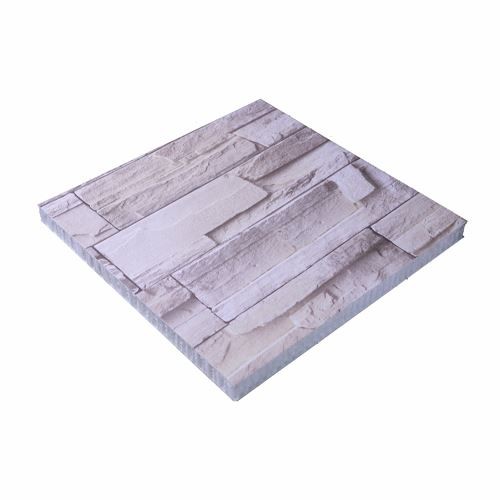
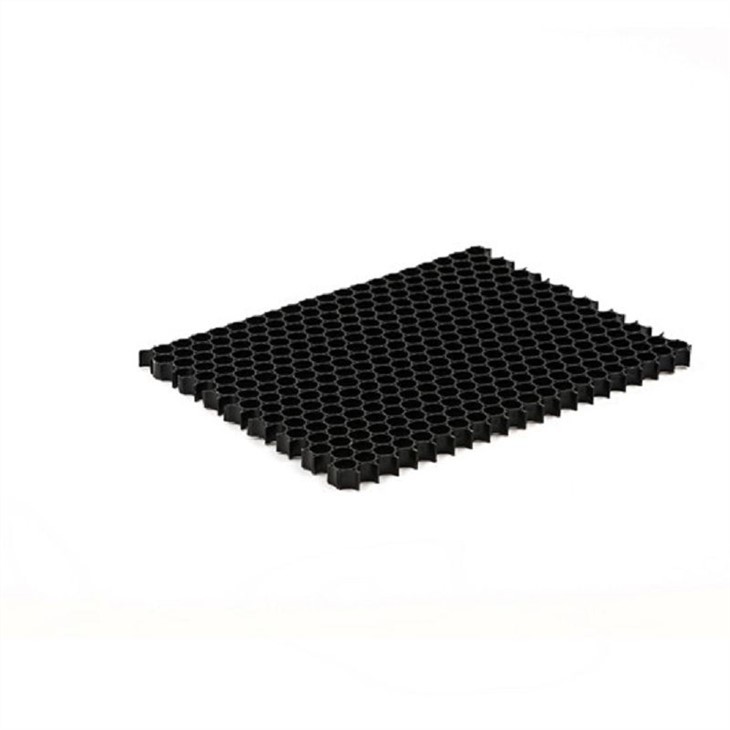
First off, let's understand what honeycomb building panels are. These panels are made up of a honeycomb core, which is typically sandwiched between two outer layers. The honeycomb core structure gives these panels some amazing properties. It's lightweight, yet it has high strength and stiffness. This combination makes it a popular choice in various construction and architectural projects.
Now, when it comes to using these panels for curved structures, it's not as straightforward as using them for flat surfaces. But that doesn't mean it's impossible. In fact, with the right techniques and materials, honeycomb building panels can be a great option for creating beautiful and functional curved structures.
One of the key factors to consider is the flexibility of the honeycomb core. There are different types of honeycomb cores available, and some are more flexible than others. For instance, the Thermoplastic Honeycomb Core is known for its relatively high flexibility. This type of core can be bent to a certain degree without losing its structural integrity.
When we talk about creating curved structures with honeycomb building panels, we need to think about two main approaches: cold bending and hot forming.
Cold bending is a relatively simple method. It involves applying force to the panel to bend it into the desired curve. This method works well for panels with a more flexible honeycomb core and for curves with a relatively large radius. However, there are limitations. If the curve is too sharp, the panel may crack or the honeycomb core may get damaged. So, cold bending is more suitable for gentle curves in architectural elements like curved partitions or small - scale decorative features.
On the other hand, hot forming is a more advanced technique. It involves heating the panel to a specific temperature to make it more malleable. Once the panel reaches the right temperature, it can be shaped into complex curves. This method allows for greater precision and the ability to create sharper curves. But it requires specialized equipment and expertise. Hot forming is often used in high - end architectural projects where complex curved shapes are required, such as in the construction of modern - looking facades or unique interior structures.
Another aspect to consider is the outer layers of the honeycomb building panels. The outer layers play an important role in the overall performance of the panel when it's used in a curved structure. They need to be able to withstand the bending forces without delaminating from the honeycomb core. High - quality outer layers, such as those made from strong polymers or metal sheets, are often preferred for curved applications.
Let's take a look at some real - world examples. In some modern architectural buildings, honeycomb building panels have been used to create stunning curved facades. These facades not only look great but also provide excellent insulation and structural support. For example, in a recent project in a major city, the architects used Honeycomb - building - panels to create a large - scale curved entrance canopy. The panels were cold - bent to the required curve, and the result was a beautiful and functional structure that added a unique touch to the building.
In the automotive industry, honeycomb panels are also used for creating curved parts. The flexibility of the panels allows for the production of lightweight and aerodynamic curved components, such as car body panels. This not only reduces the weight of the vehicle but also improves its fuel efficiency.
However, there are some challenges when using honeycomb building panels for curved structures. One of the main challenges is ensuring the uniformity of the curve. If the curve is not uniform, it can affect the structural integrity of the panel and the overall appearance of the structure. Another challenge is the cost. The specialized equipment and techniques required for hot forming or even for precise cold bending can increase the overall cost of the project.
Despite these challenges, the benefits of using honeycomb building panels for curved structures are significant. The lightweight nature of the panels makes them easier to handle and install, especially in large - scale projects. They also offer excellent thermal and acoustic insulation properties, which are important in both residential and commercial buildings.
So, to answer the question: Yes, honeycomb building panels can be used for curved structures. But it depends on various factors such as the type of honeycomb core, the bending method, the quality of the outer layers, and the specific requirements of the project.
If you're considering using honeycomb building panels for your next curved structure project, I'd love to have a chat with you. We can discuss your specific needs, the best type of panels for your application, and how we can work together to make your project a success. Whether it's a small - scale decorative piece or a large - scale architectural marvel, we have the expertise and the products to meet your requirements.
In conclusion, honeycomb building panels offer a lot of potential for creating unique and functional curved structures. With the right approach and our support, you can turn your creative ideas into reality.
References
- Architectural research on the use of honeycomb panels in curved structures
- Automotive industry reports on the application of honeycomb panels in curved components