

Hey there! As a supplier of Non Woven Honeycomb Panels, I often get asked a bunch of questions about our products. One question that pops up quite frequently is, "Is Non Woven Honeycomb Panel fire-resistant?" Well, let's dig into this topic and find out.
First off, let's understand what Non Woven Honeycomb Panels are. These panels are made up of a honeycomb structure, which is not just super lightweight but also very strong. The non-woven part refers to the material used in its construction. Non-woven materials are created by bonding fibers together rather than weaving them like traditional fabrics. This process gives the panels unique properties that make them suitable for various applications.
Now, let's talk about fire resistance. Fire resistance isn't a black-and-white thing. It's more of a spectrum. When we say a material is fire-resistant, it doesn't mean it won't catch fire at all. Instead, it means that the material can withstand exposure to fire for a certain period without burning rapidly or spreading the flame quickly.
The fire resistance of Non Woven Honeycomb Panels depends on several factors. One of the main factors is the type of material used in the non-woven layer. Different materials have different degrees of flammability. For example, some materials might be treated with special chemicals to enhance their fire resistance. These chemicals can act as a barrier between the panel and the fire, preventing it from spreading or igniting easily.
Another factor is the density of the honeycomb structure. A denser honeycomb structure can provide better insulation against heat and fire. This is because the cells in the honeycomb can trap air, which acts as an insulator. When a fire breaks out, the trapped air can slow down the transfer of heat through the panel, giving people more time to evacuate or putting out the fire.
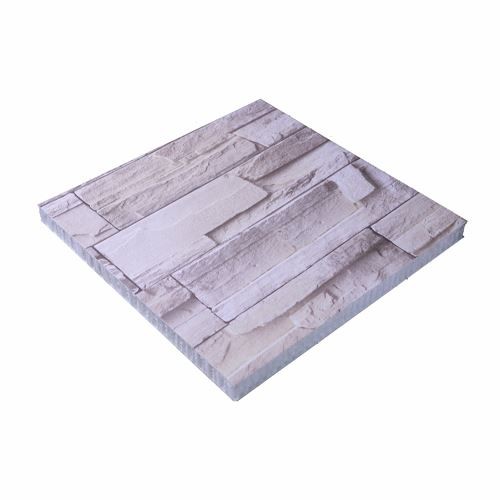
Let's look at some real-world applications. Non Woven Honeycomb Panels are widely used in the construction industry, especially in Honeycomb-building-panels. In buildings, fire safety is a top priority. These panels can be used in partitions, ceilings, and walls. Their fire-resistant properties can help contain a fire within a certain area, preventing it from spreading to other parts of the building.
In the transportation industry, Non Woven Honeycomb Panels are also used to make interior components of vehicles. In a vehicle fire, every second counts. The fire-resistant nature of these panels can reduce the risk of a small fire turning into a major catastrophe.
But it's important to note that while Non Woven Honeycomb Panels can have good fire resistance, they are not fireproof. That means in extreme cases, if exposed to a high-intensity fire for a long time, they will eventually burn. So, it's crucial to use them in combination with other fire safety measures.
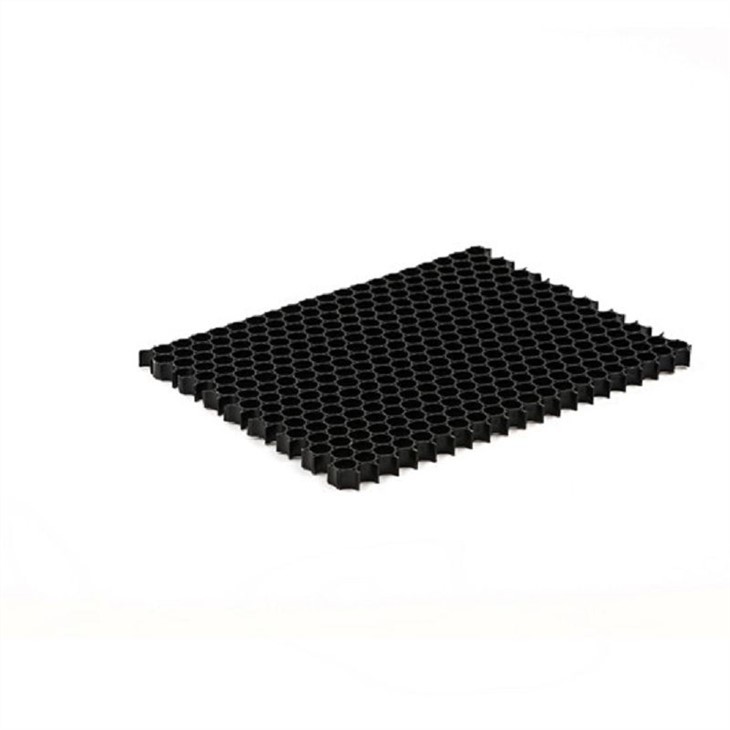
Now, let's take a closer look at the Thermoplastic Honeycomb Core. This type of honeycomb core is often used in Non Woven Honeycomb Panels. Thermoplastic materials have some interesting properties when it comes to fire. They can soften and melt when exposed to heat, which can be both a good and a bad thing. On one hand, the melting can create a barrier that helps to slow down the spread of fire. On the other hand, if the melted material drips, it can spread the fire to other areas. So, it's important to choose the right type of thermoplastic honeycomb core and make sure it's properly designed and installed to maximize its fire resistance.
In addition to the material and structure, the manufacturing process also plays a role in the fire resistance of Non Woven Honeycomb Panels. A well-controlled manufacturing process can ensure that the panels are of high quality and have consistent fire-resistant properties. For example, if the bonding process between the non-woven layer and the honeycomb core is not done correctly, it can affect the overall fire resistance of the panel.
So, is Non Woven Honeycomb Panel fire-resistant? The answer is yes, to a certain extent. But it's important to understand its limitations and use it in the right way. If you're considering using Non Woven Honeycomb Panels in your project, it's a good idea to consult with a professional. They can help you determine the best type of panel for your specific needs and ensure that it meets all the necessary fire safety standards.
As a supplier, I'm always happy to provide more information about our Non Woven Honeycomb Panels. Whether you're in the construction, transportation, or any other industry, we can offer high-quality panels that are designed to meet your requirements. If you're interested in our products, we'd love to have a chat with you about your project and how our panels can fit into it.
Now, let's sum it all up. Non Woven Honeycomb Panels can be a great choice for applications where fire resistance is important. Their unique structure and the materials used in their construction give them some level of protection against fire. However, it's not a guarantee of complete fire safety. By understanding the factors that affect their fire resistance and using them in combination with other fire safety measures, you can make the most of these panels.
So, if you're thinking about purchasing Non Woven Honeycomb Panels, why not reach out to us? We're here to answer all your questions and help you find the perfect solution for your project. Let's start a conversation and see how we can work together to make your project a success.
References
- Various industry reports on fire safety in construction and transportation
- Technical specifications of Non Woven Honeycomb Panels and Thermoplastic Honeycomb Core